EVEREST THREE HIGH PASSES TRAVERSE
Solukhumbu, Nepal
4.3/5
100% of guests recommend
Duration
18 Days
Tour Type
Everest Trekking
Group Size
20 persons
Location
Mount Everest
Overview
“Crossing over three major high passes of Khumbu with outstanding mountain panorama and adventurous to challenging walks, achieving an adventure of lifetime experience with breathtaking panorama of mountains views from Kalapathar and Gokyo-Ri and overpasses exceptional scenery of world’s highest mountains on daily walks in the shade of Mt. Everest. Explore impressive Sherpa villages enriched with the age-old heritage of Buddhist culture. Flying in and take off at the unique Lukla airstrip with a sweeping mountain panorama of Everest and Pumori from the highest spot, Kalapathar hilltop within the World Heritage Sites of Sagarmatha National Park and its cool alpine woodland.”
EVEREST THREE HIGH PASSES TRAVERSE - MAJOR HIGHLIGHTS
- Three High Passes: Kongma La (5,535m), Cho La (5,420m), and Renjo La (5,360m) with stunning mountain views.
- Everest Base Camp: Trek to the base of Mount Everest (5,364m).
- Kala Patthar: Iconic viewpoint for Everest and nearby peaks (5,545m).
- Gokyo Lakes and Gokyo Ri: Visit turquoise lakes and ascend for panoramic Himalayan views.
- Diverse Terrain: Glaciers, moraines, alpine meadows, and forests.
- Sherpa Culture: Explore villages, monasteries, and Tibetan Buddhist heritage.
- Namche Bazaar: Acclimatization hub with vibrant markets and scenic vistas.
- Unparalleled Views: Everest, Lhotse, Makalu, Cho Oyu, Ama Dablam, and more.
- Challenging Adventure: Remote, high-altitude trek for seasoned adventurers.
- Wildlife: Chance to spot Himalayan tahr, musk deer, and pheasants in Sagarmatha National Park.
Mode of Trekking:
Hotels and in lodge on walks.
Trek Grade:
Moderate, Adventurous to Challenging in snow conditions.
Area of Trek:
Nepal North Mid-East within the Khumbu district of Everest.
Highest Altitude Gain:
On top Kalapathar is 5,545 m, Kongma-la is 5,535 m, Tsho-la is 5,365 m, and Renjo-la is 5,464 m high.
People and Culture:
Populated by Sherpa the highlanders of Everest are enriched with colorful Buddhist religion and impressive culture.
Trek Duration:
17 Nights and 18 Days (Katmandu to Kathmandu)
Average walks:
Minimum 4 hrs to Maximum 6 hrs or more.
Total Trip:17 Nights and 18 Days from Kathmandu to Kathmandu.
Seasons:
April to May and September to early December months April to May are good for treks when wild-flowers are in full bloom, where most of the days are clear for views Morning and Night time as well in shade will be cold without a wind-chill factor, October to December another best months to trek when day is clear, but short sunlight hours due to autumn and winter months will be freezing morning/night times with chances of snow.
INTRODUCTION - EVEREST THREE HIGH PASSES TRAVERSE
Everest Three High Passes Traverse is a complete adventure that you will experience on this high-altitude walk and climb, facing breathtaking scenic mountain views that are more breathtaking than any other walk in the Himalayas range.
Everest Three High Passes Traverse leads you from one beautiful place to another all within the high and scenic Khumbu valley and its high ridges in the shade of mighty Mt. Everest that overshadows on this trekking adventure.
The wonderful and scenic walk leads you on the main trails of Everest base camp from Lukla for some days, and then with a difference where on this journey our route diverts towards off the beaten tracks, seldom explored and ventured by other few trekkers into complete wilderness in between high mountains of Khumbu.
An amazing walk with constant views of snow-capped peaks in the harmony of local nice and lovely Sherpa villages, where men-folk are renowned and famous pioneers as the first mountaineering guides, the Sherpa interwoven with Buddhist religion enriched with strong age-old heritage and cultures.
Everest Three High Passes leads you to wonder after being in green lush vegetation and a lovely forest of rhododendron-magnolia-pines-firs-birch and juniper and into arid and barren terrain within the arctic zone of ice and glaciers at Everest base camp and over high scenic passes.
Truly, an adventure for all interested trekkers where we have designed and set the itinerary days to suit high altitudes having many acclimatization days and as well to explore local culture and visiting its impressive monasteries.
Where walk leads you to the famous Namche Bazaar after flying into Lukla and then crossing first Kongma-la from scenic Imjatse Valley to reach Everest base camp and continues towards second high Tsho /Cho-la pass to reach picturesque Gokyo valley and its glacial simmering lakes.
After an amazing time and adventure crossing the final high pass over Renjo-la from scenic Gokyo to reach at quaint and sleepy villages at Thame with its famous and oldest monastery of Khumbu, and then completing our marvelous high altitude and scenic journey at Lukla, with flight to Kathmandu to end our adventure of a lifetime experience on Everest Three High Passes Traverse.
PACKING LIST FOR EVEREST THREE HIGH PASSES TRAVERSE
1. Clothing
- Base Layers: Moisture-wicking thermal tops and bottoms.
- Insulation Layers: Fleece jacket and down jacket (warm and lightweight).
- Outer Shell: Waterproof and windproof jacket and pants.
- Trekking Pants: Lightweight and quick-drying.
- Trekking Shirts: Long-sleeve and short-sleeve (moisture-wicking).
- Underwear: Quick-dry and comfortable.
- Gloves: Inner thermal gloves and outer waterproof gloves.
- Headgear: Warm hat, sun hat, and buff/scarf for wind and dust protection.
- Socks: Thermal and trekking socks.
- Gaiters: For snow and rocky terrains.
2. Footwear
- Trekking Boots: Waterproof, durable, and broken-in.
- Camp Shoes: Lightweight and comfortable for evenings.
3. Backpacks and Bags
- Trekking Backpack: 40-50L capacity with a rain cover.
- Duffel Bag: For porters to carry gear.
- Daypack: Small pack for essentials during the day.
4. Sleeping Gear
- Sleeping Bag: Rated for -15°C to -20°C.
- Sleeping Bag Liner: For added warmth and hygiene.
5. Trekking Gear
- Trekking Poles: Adjustable and lightweight.
- Sunglasses: UV protection to prevent snow blindness.
- Headlamp: With extra batteries.
- Water Bottles/Reservoir: 2-3 liters capacity.
- Water Purification: Tablets, filters, or SteriPEN.
- Map and Compass/GPS: For navigation (if self-guided).
6. Health and Hygiene
- First Aid Kit: Pain relievers, altitude sickness medication, blister care, and personal medicines.
- Toiletries: Biodegradable soap, toothpaste, toothbrush, wet wipes, and tissues.
- Sunscreen: High SPF (30+).
- Lip Balm: With SPF protection.
7. Electronics and Gadgets
- Camera: Lightweight with extra batteries.
- Power Bank: High-capacity for charging devices.
- Travel Adapter: Compatible with Nepal’s plugs.
- Phone/Communication Device: With local SIM or offline maps.
8. Snacks and Energy
- High-Calorie Snacks: Energy bars, trail mix, nuts, and chocolates.
- Electrolyte Powders: To stay hydrated.
9. Documents and Money
- Passport: Valid with Nepal visa.
- Permits: TIMS card and Sagarmatha National Park entry permit.
- Cash: In Nepali Rupees for teahouses and tips.
10. Miscellaneous
- Hand Warmers: For extra warmth in cold conditions.
- Dry Bags: To keep gear dry.
- Notebook and Pen: For journaling your adventure.


Included/Excluded
Three times meals (breakfast,lunch,dinner) breakfast with hot drinks . accommodations during trekking tea house basis
transportation (airport pick up and drop )
All necessary permits for trekking
16 nights’ accommodation during the trek (Twin Sharing Base)
duffels bags , sleeping bags , down jackets if you needed
first aid box , water purified pills
Staff insurance, well-paid salary, equipment, food, Hotel, etc.
both way flight to ktm-lukla
International airfare, Nepal visa fee and any kind of insurance
yours nepali visa , hotel in kathmandu , travel insurance
Bar bills and extra hot drinks extra foods , drinking water
wifi, hot showers, local entrance fees, donations, mobile or power bank charge
tips for guide and porters (expected)
Itinerary
DAY 1
FLY TO LUKLA(2850mtr) AND TRK TO PHAKDING(2650mtr) Dist.-(8km) Tim-(3,4hrs)
DAY 1
FLY TO LUKLA(2850mtr) AND TRK TO PHAKDING(2650mtr) Dist.-(8km) Tim-(3,4hrs)
Morning at the earliest before or after a quick breakfast or one carry-pack breakfast to save time reaching Kathmandu domestic airport terminal, where a short scenic flight of 35 minutes reaches you at Lukla, a gateway Sherpa town at the height of 2,820 m high facing views of Kongde peak and Naulekh Himal.
With a refreshing stop at Lukla then follow our lead guide after adjusting baggage with porters to carry or on pack animals (Jopkyo a mixed breed of normal cow and Yak).
As walk leads past Lukla town heading down to Choplung small village and then around Dudh-Kosi River valley and gorge towards our first overnight stop at Phadking village near Dudh-Kosi a glacial river.
DAY 2
TREK TO NAMCHE(2450mtr) FROM PHAGDING(2650mtr) Dist-(12km) Time-(6,7hrs)
DAY 2
TREK TO NAMCHE(2450mtr) FROM PHAGDING(2650mtr) Dist-(12km) Time-(6,7hrs)
Morning begins with a gradual walk following the Dudh Kosi river upstream past several Sherpa nice villages with short ups and down and then crossing a long suspension bridge to Monjo village, where Sagarmatha National Park starts entering into park areas past Jorsalle the last village before Namche Bazaar.
From Jorsalle crossing bridge and into serene woodland of tall pines and rhododendron trees with climb on winding trail facing views of Kongde, Kusum Khanguru and Tharmasakru peaks as walk brings you into famous Namche Bazaar, which is more of a town rather than village with many good restaurants, hotels, lodge having number of shops and stores includes Bank and Post-Office.
At Namche enjoy the comfort of nice cozy lodge, facing great views of snow capped peaks the closest lies Kongde peaks.
DAY 3
ACCLIMATIZATION DAY AT NAMCHE
DAY 3
ACCLIMATIZATION DAY AT NAMCHE
At Namche rest day for acclimatization before heading higher area, where short hike up to view point like towards Everest View Hotel takes nearly 3-4 hours both ways, offers excellent panorama of mountains with Everest and magnificent Amadablam
In Namche visit museum where you can gain knowledge of Khumbu Sherpa, culture, flora-fauna as well of mountaineering expedition history with rest of the afternoon at leisure.
DAY 4
NAMCHE(3450mtr) TO TENGBOCHE (3880mtr) dist-(11km) time-(5,6 hrs)
DAY 4
NAMCHE(3450mtr) TO TENGBOCHE (3880mtr) dist-(11km) time-(5,6 hrs)
Flowing pine forest from the beginning till tengboche will make the day the aroma of pine with the beauty of snow-capped mountains around like Mt.Thamsherku(6670mtr), Mt. kangtega(6700mtr) Mt.Amadablam(6812mtr) Mt.Everet(8848mtr) Mt.Lhotse (8516mtr) may see some wild animals like Himalayan Thar, Himalayan monal. From Kyanjuma, walk down to Phungi-thanga stop for lunch for the final push to Tengboche trek 2.5 hours switch-pack uphill to visit one of the oldest monasteries in the Everest region Tengboche monastery Possibly join the evening worship ceremony overnight at Tengboche .
DAY 5
TENGBOCHE (3880mtr) TO DINGBOCHE (4410mtr) Dist-(10km) Time-(5,6hrs)
DAY 5
TENGBOCHE (3880mtr) TO DINGBOCHE (4410mtr) Dist-(10km) Time-(5,6hrs)
Morning catching the views of surrounding peaks, where the walk leads downhill past Deoboche within the woodland to reach Imjatse River and then crossing over a steel bridge, from here end of green vegetation and tree lines as the walk leads into windswept dry country to reach Pangboche. The last permanent village on route Everest base camp where other settlements with lodge catering the needs of travelers and trekkers.
Slowly walk leads past Pangboche heading higher with ups and down to a river, with the last climb of the day for an hour to reach a scenic Imjatse valley at Dingboche facing the North Side of Amadablam with views of Island Peak towards the east direction.
DAY 6
ACCLIMATIZATION AT HIGH ALTITUDE HIKE UP TO 4700mtr
DAY 6
ACCLIMATIZATION AT HIGH ALTITUDE HIKE UP TO 4700mtr
Another rest day to support against high altitude symptoms with acclimatization day at Dingboche where one can hike further up towards Nakarjung Hill to get best panorama of surrounding peaks and of Imjatse valley.
Afternoon rest and enjoy the views in the comfort of nice warm lodge with preparation for next day walks to Lobuche.
DAY 7
TREK TO CHHUKUNG (4730mtr) Dist-(5km) Time-(2,3hrs)
DAY 7
TREK TO CHHUKUNG (4730mtr) Dist-(5km) Time-(2,3hrs)
From Dingboche morning walk to Chhukung which is the last settlement of Khumbu area located at the end of beautiful Imjatse valley offers great views of mountains. On reaching at Chukung, with afternoon free or hike to Chukung Ri for best views of peaks with preparation for next early morning adventure to traverse over Kongma-la pass.
DAY 8
BIG DAY TREK TO KONGMA-LA PALL (5535mtr) CONTINUE TO LOBUCHE (4890mtr) Dist-(12km) Time-(7,9 hrs)
DAY 8
BIG DAY TREK TO KONGMA-LA PALL (5535mtr) CONTINUE TO LOBUCHE (4890mtr) Dist-(12km) Time-(7,9 hrs)
With pleasant stop and overnight in Chukung, starting very early morning before dawn where walk leads above Imjatse valley to reach hidden corner on icy path and rocky trail beneath Kongma-la with Kongma or Mehra peaks.
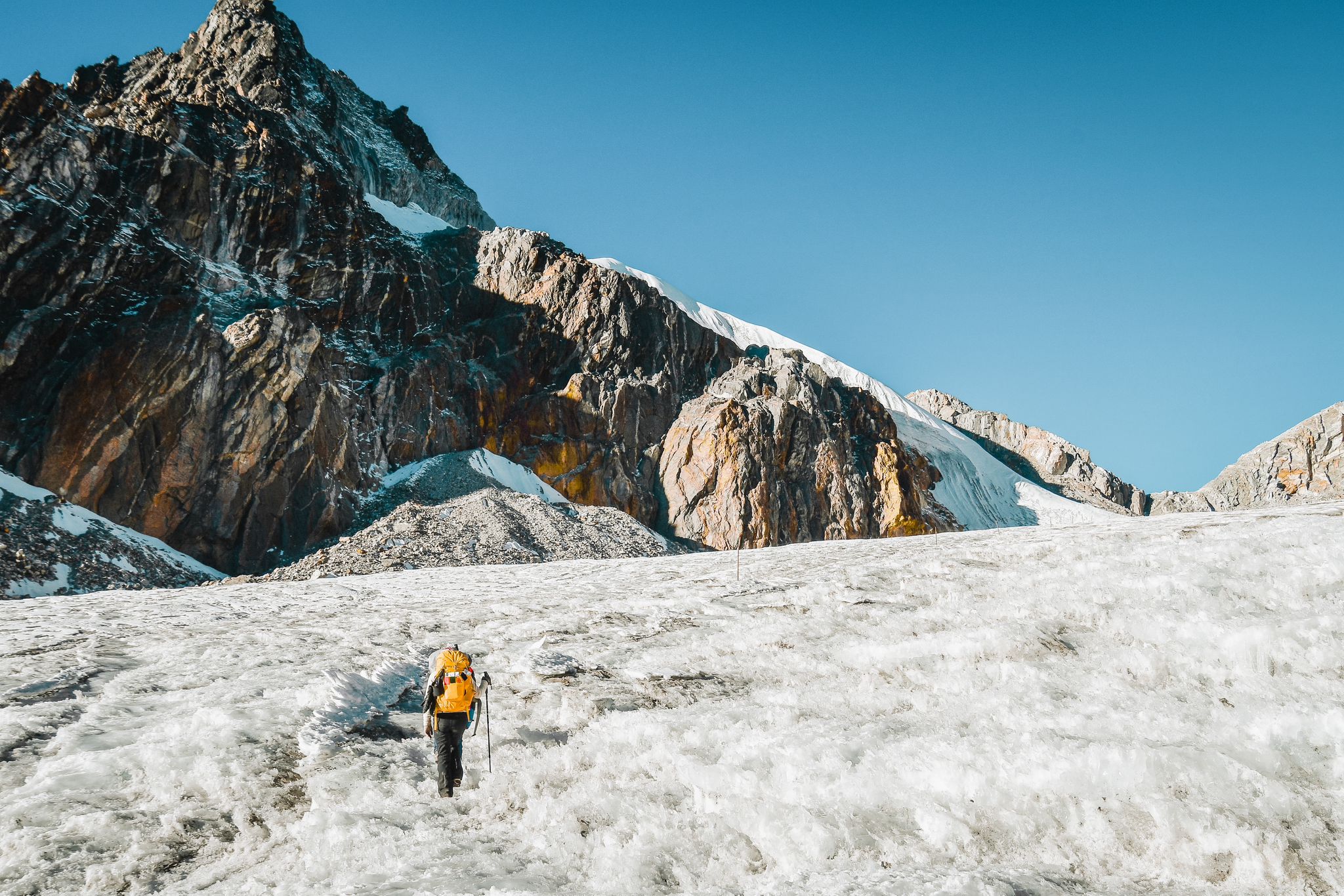
After rest, cross over Kongma-la pass above 5,535 m / 18,159 ft which is hidden in-between great Nuptse wall, Mehra and Pokalde peaks. After a tough climb towards Khumbu glacier and moraine one has to be careful here on the misleading after descending the walk leads on the path to a short steep climb up to the terminal debris of Khumbu Glacier to reach at Lobuche for overnight stop in the comfort of a cozy lodge after great full day walk, located on a corner within wide valley beneath peaks of Lobuche East and West.
DAY 9
TREK TO GORAKSHEP(5170mtr) THEN TO EVEREST BASE CAMP Dist-(9km) Time-(6,7hrs)
DAY 9
TREK TO GORAKSHEP(5170mtr) THEN TO EVEREST BASE CAMP Dist-(9km) Time-(6,7hrs)
Our adventure today leads to our main target and goal at Everest base camp, where morning walk follows a flat valley with slow climb to reach further and then a steep climb to reach a ridge near above Khumbu glacier.
As walk continues over rocky moraines and ice to reach a scenic flat areas at Gorakshep located on the bottom of Kalapathar and Mt. Pumori on route Everest base camp, at Gorakshep with short break catching breathe in this high altitude with dry air.
From Gorakshep follow our lead guide heading further east to reach at much awaited destination Everest Base Camp with marvelous views of Khumbu Ice-Falls, glaciers looking above peaks of Nuptse, Everest, and Lhotse, in hte high mountaineering season of April to May this grand spot is flooded with tents of expeditions. After exciting time having achieved our goal walk back to Gorakshep for overnight stop before heading downhill back to Lukla with climb of Kalapathar.
DAY 10
MORNING HIKE TO KALA-PATHHER(5600mtr) AFTER TREK TO DZONGLA(4830mtr) Dist-(9km) Time-(5,6hrs)
DAY 10
MORNING HIKE TO KALA-PATHHER(5600mtr) AFTER TREK TO DZONGLA(4830mtr) Dist-(9km) Time-(5,6hrs)
Starting early morning before breakfast climb to the top of a rocky hill above 5,545 m the highest spot of the adventure, where you will be rewarded with an overwhelming panorama of giant surrounding peaks with close views of Everest and Mt. Pumori.
After a mesmerizing moment on top Kalapathar descends to Gorakshep for breakfast and then carries on trekking to Dzongla, close to Cholatse peaks around an isolated corner of Khumbu for overnight before high Tsho /Cho-la pass to reach Gokyo valley.
DAY 11
SECOND THRIVE DAY OF THREE CHO-LA PASS(5365mtr) THEN DRANGNAG (4700mtr)Dist-(9km) Time-(6,7hrs)
DAY 11
SECOND THRIVE DAY OF THREE CHO-LA PASS(5365mtr) THEN DRANGNAG (4700mtr)Dist-(9km) Time-(6,7hrs)
Our second adventure to cross over the high Tsho / Cho-la pass starts early with a climb on a steep slope crossing some icy sections and glaciers to reach on-top Tsho-la 5,367 m, (challenging sometimes) to cross in snow conditions), from the top offers views of high peaks and glacier and then descend carefully to Thanknag for overnight stop after crossing over a second pass of the adventure.
DAY 12
DRAGNAG TO GOKYO LAKE (4770mtr) Dist-(4km) Time-(3,4hrs)
DAY 12
DRAGNAG TO GOKYO LAKE (4770mtr) Dist-(4km) Time-(3,4hrs)
Morning walk leads to Gokyo main third lake following a scenic trail over Ngozumpa glacier walking over the glacier we have to pay attention to walking on rocky areas towards the first lake and then the second lake, to reach a third lake called Dudh Pokhari or Gokyo Lake.
This beautiful area within Gokyo at 4,810 meters high, and after lunch short walk around the lake with views of Mt. Cho Oyu World’s 06th highest, and Gyachung Kang that reflects on emerald Gokyo Lake.
DAY 13
HIKE TO GOKYO-RI(5357mtr) AND REST BEFORE THIRD PASS
DAY 13
HIKE TO GOKYO-RI(5357mtr) AND REST BEFORE THIRD PASS
trek to Gokyo-ri (5357mtr) from Gokyo will take 3 hours trek to the top Gokyo-ri is one of the best places to enjoy the top four major mountains in the world, Mt.Everest, Mt.Everest, Mt.Makalu, Mt. cho-oyu with many other mountains in wide 360-degree
DAY 14
THIRD THRVE DAY RENJO-LA PASS(5417mtr) AND LUNGDHEN(4380mtr) Dist-(11km) Time-(7,8hrs)
DAY 14
THIRD THRVE DAY RENJO-LA PASS(5417mtr) AND LUNGDHEN(4380mtr) Dist-(11km) Time-(7,8hrs)
After a pleasant time at Gokyo, the morning leads to cross our last and final high pass of the adventure, starting before dawn on leaving Gokyo and heading for a steep climb towards Renjo-la, the walk follows the end of Gokyo Lake, where the route steep climb leads on top of the pass offering super views of Mt. Everest with gokyo lake, Lhotse, Cholatse and Taboche with Makalu, after crossing Renjo La pass over 5,417m / 17,929 ft, one of the most difficult section of the adventure.
Reaching the top rewards you with a breathtaking panorama of Mt. Cho-Oyu and other high surrounding peaks, after enjoyable and exciting views and climbs, walk descend towards frozen ponds beneath Renjo La pass, and then a long descend reaching a small settlement at Lungdeng for overnight stop, which is on route to high Nangpa-la pass into Tibet.
DAY 15
TREK TO THAME (3820mtr) Dst-(13km) tIME-(4,5hrs)
DAY 15
TREK TO THAME (3820mtr) Dst-(13km) tIME-(4,5hrs)
On completing all three major passes of the adventure, from here an easy walk with gradual and long downhill to Marlung village located above Bhote Kosi River, from Marlung route leads past Thyangmoche and Hungmo, and then walk into scattered Sheppard’s huts and Yak grazing pasture.
Afternoon walk to Thame village for overnight stop, a quaint and a sleepy village located on the trail towards high Tashi Labtsa pass close to Gaurishankar and Rolwaling area, and as well on route to Tibet border.
At Thame visit one of oldest monasteries within Khumbu, believed to be of more than 500 years old enriched with ancient idols and artifacts.
DAY 16
TREK TO MONJO VIA NAMCHE Dist-(14km) Time-(5,6hrs)
DAY 16
TREK TO MONJO VIA NAMCHE Dist-(14km) Time-(5,6hrs)
After a memorable and exciting adventure crossing and traverse over all major high passes of Khumbu, an easy walk from here on without worry of high altitude sickness as route leads loosing elevation every hour of walks.
From Thame reaching with short climb to Thamo and back into green forest where walk leads to Namche Bazaar and then after a short refreshing break heading down towards Dudh Kosi River gorge and valley reaching at Sagarmatha National Park entrance and exit then at Monjo for overnight stop before Lukla.
DAY 17
TREK BACK TO LUKLA Dist-(13km) Time-(5,6hrs)
DAY 17
TREK BACK TO LUKLA Dist-(13km) Time-(5,6hrs)
Our last final day walks a short trek to reach back at Lukla starting from Monjo village, where walk continues past Phakding with last short climb to reach at last overnight stay in Lukla before flying back to Kathmandu
DAY 18
FLY BACK TO KTM FROM LUKLA 30-40 MINUTES
DAY 18
FLY BACK TO KTM FROM LUKLA 30-40 MINUTES
Depending upon flight time for Kathmandu, morning with last breakfast in Khumbu and Lukla transfer to air terminal named after Tenzing and Hillary, the first to conquer Mt. Everest in 1953.
As per flight schedule board in a smaller aircraft for sweeping short air journey to reach Kathmandu airport and then transfer back to your respective hotels.
Travel Styles
Cultural
Nature & Adventure
Activities
Festival & Events
Special Interest
Facilities
Wifi
Gymnasium
Mountain Bike
Satellite Office
Staff Lounge
Golf Cages
FAQs
How long does the Everest Three Passes Trek take?
Usually lasting 17 days, the trip starts with a flight from Kathmandu to Lukla and covers about 103 miles (166 kilometers) across difficult and varied terrain. This covers time for getting used to the surroundings and visiting important locations.
What are the main highlights of the Everest Three Passes Trek?
Crossing the three main high-altitude passes—Renjo La (5,43 5m), Cho La (5,420 m), and Kongma La (5,535 m)—visiting Gokyo Lakes and Everest Base Camp, and arriving at Kala Patthar (5,555 m) for breathtaking sunrise views of Mount Everest are some of the trek's highlights. Additionally, you will visit well-known monasteries like Tengboche and experience the distinctive Sherpa culture in communities like Namche Bazaar.
Is the Everest Three Passes Trek appropriate for hikers of all skill levels?
The greatest candidates for this expedition are physically fit. Long trekking days and high-altitude passes make the terrain difficult. You can, however, finish the Three Passes Trek if you are psychologically and physically strong.
How fit do I need to be for the Everest Three Passes Trek?
One of the more difficult climbs in the Everest region, the Everest Three Passes Trek calls for a high level of physical fitness. It requires three high-altitude passes over 5,000 meters, therefore endurance, stamina, and good cardiovascular condition are crucial.
Can beginners with previous trekking experience undertake this trek?
Yes, this walk is doable by hikers who are in good physical condition. While not required, prior experience managing altitude, difficult terrain, and extended hiking days is advantageous.
What level of technical and physical preparation is advised for the trek to the Everest Three Passes?
Prioritize leg strengthening exercises like squats, lunges, and step-ups in addition to aerobic activities like swimming, cycling, and running. To replicate trip conditions, you can hike on rough terrain while carrying a full bag. Technical climbing skills are not necessary for the journey, however it will be beneficial to be comfortable with utilizing trekking poles and handling difficult ascents and descents.
What permits are required for the Everest Three Passes Trek?
You will need the Sagarmatha National Park Entry Permit and the Khumbu Pasang Lhamu Rural Municipality Entry Permit.
Where can I find the Everest Three Passes Trek permits?
Permits are available at the Sagarmatha National Park gate in Monjo or Kathmandu. But for your convenience, we are able to obtain those permits.
Does the Everest Three Passes Trek require travel insurance?
Yes, travel insurance is essential for this trek.
How to get a visa for Nepal?
Upon arrival at Kathmandu's Tribhuvan International Airport, visas are available for the majority of nationalities. A passport with at least six months left on it, a passport-size photo, and the visa application cost are required for an on-arrival visa. The period of stay determines the application fee. Currently, a 30-day stay costs $50 USD. For further information, please visit (https://www.immigration.gov.np/en.)
What should my insurance cover for this trek?
Health care expenses and emergency helicopter evacuation up to 5,500 meters should be covered.
What roles do guides and support staff play during the trek?
Support workers, such as porters, assist with carrying luggage and make sure the journey runs well, while guides navigate the route, handle altitude adjustment, and provide insights into local culture and history.
Can I trek the Everest Three Passes on my own without a guide?
The government of Nepal has prohibited solo trekking within the country since April 2023.
What kind of lodging options are there for the Everest Three Passes Trek?
Standard rooms, usually with twin beds, are available in teahouses and lodges where you will stay. You might find rooms with associated bathrooms at lower elevations.
Do teahouses and lodges include contemporary amenities like hot showers and electricity?
Devices can usually be charged with electricity, though there might be extra fees. The majority of teahouses offer hot showers, but they can be more expensive, particularly as you go higher in elevation.
Throughout the hike, will I have access to Wi-Fi or recharge stations?
Yes, however in distant locations, connectivity may be erratic and Wi-Fi and charging stations may incur additional costs.
What kind of meals are provided during the Everest Three Passes Trek?
We serve locally sourced, high-energy Nepali dishes including potatoes, noodles, pasta, and dal bhat tarkari (rice lentils and vegetables). Burgers and sandwiches from the West are also offered.
Are there vegan or vegetarian eating options?
Should I carry purification tablets or is there safe drinking water available?
You can purchase bottled water from tea houses and shops along the way, but for environmental reasons, we recommend that you bring a water bottle and purchase boiled or filtered water from the tea houses. Additionally, we encourage you to use water purification tablets before drinking water and to avoid drinking straight from local taps, wells, or rivers.
What is the ideal time of year to attempt the Everest Three Passes Trek?
Spring (March to May) and autumn (September to November) are the greatest seasons, with consistent weather, warm temperatures, and brighter skies.
How does the weather affect the trekking experience on the Everest Three Passes Trek?
Weather has a significant impact on the trek, particularly at high passes where conditions can change quickly. Snowfall can make higher-altitude treks more difficult, while excessive rain, particularly during the monsoon season, makes the paths slick.
Is it advisable to go trekking during the monsoon or winter season?
We do not recommend trekking during the rainy season owing to the increased risk of landslides, slippery terrain, and poor visibility. During the winter, you have to deal with intense cold, snow, and potential trail obstacles.
What health dangers should I be aware of on the Everest Three Passes Trek?
Altitude sickness is a primary concern as well as fatigue, dehydration, and cold-related illnesses. It’s essential to monitor symptoms and take precautions.
What is altitude sickness?
Altitude sickness, also known as acute mountain sickness (AMS), occurs when a person ascends to high altitudes too quickly, where the air has lower oxygen levels. It typically happens at elevations above 8,000 feet (2,400 meters).
symptoms of altitudesickness?
Mild cases:
Headache
Dizziness
Nausea or vomiting
Shortness of breath
Fatigue
Loss of appetite
Trouble sleeping
Severe cases (can be life-threatening):
Confusion
Loss of coordination (ataxia)
Severe shortness of breath
Coughing up pink, frothy fluid (sign of high-altitude pulmonary edema, HAPE)(https://en.wikipedia.org/wiki/High-altitude_pulmonary_edema)
Swelling of the brain (high-altitude cerebral edema, HACE)
What are the emergency measures in place during the trek?
It's best to coordinate with Guide in an emergency. Then, we'll coordinate with your insurer to start the helicopter evacuation.
Are trekking poles or other gear recommended for the Everest Three Passes Trek?
You can bring trekking poles for stability and support, especially on steep ascents and descents. Other helpful gear includes a headlamp, sunglasses, spikes, and a backpack.
What essential items should I pack for the Everest Three Passes Trek?
A down jacket, thermal layers, waterproof clothes, a sleeping bag, trekking poles, gloves, and good trek boots are all necessities. For more information, visit the equipment section.
How far in advance should I book the Everest Three Passes Trek?
We advise you to book this trek at least one month in advance, especially for peak season dates.
What is the payment process for booking the trek?
To confirm the reservation, we require 10% of the total trek cost up front. The remaining amount is due when you get to Kathmandu prior to the start of the trek. We take Western Union, Wise, credit cards, and bank transfers. You can also pay with cash when you're in Kathmandu.
Are there any cancellation or refund policies for the trek?
Yes, we do have cancellations and refund policies. Please see our terms and conditions page for details.
Are domestic flights required to reach the trek's starting point?
Yes, a flight from Kathmandu to Lukla is required to reach the starting point.
What transportation options are available after completing the trek?
After completing the trek, you’ll usually fly back to Kathmandu or Manthali from Lukla, depending on the season. If you fly back to Manthali, we will drive you back to Kathmandu.
Can I use ATM and credit cards during the trip?
Although Lukla and Namche Bazaar have ATMs, they are not entirely dependable. We suggest that you carry Nepalese Rupees in the trekking areas and exchange your money in Kathmandu.
Tour Location
Solukhumbu, Nepal
Reviews
4.3/5
Very Good
Based on
4 reviews
Excellent
1
Very Good
3
Average
0
Poor
0
Terrible
0

12/30/2024 12:56
Easy way to discover the city
Eum eu sumo albucius perfecto, commodo torquatos consequuntur pro ut, id posse splendide ius. Cu nisl putent omittantur usu, mutat atomorum ex pro, ius nibh nonumy id. Nam at eius dissentias disputando, molestie mnesarchum complectitur per te
12/30/2024 12:56
Easy way to discover the city
Eum eu sumo albucius perfecto, commodo torquatos consequuntur pro ut, id posse splendide ius. Cu nisl putent omittantur usu, mutat atomorum ex pro, ius nibh nonumy id. Nam at eius dissentias disputando, molestie mnesarchum complectitur per te
Nirajan Phuyal
12/30/2024 12:56
Good Trip
Eum eu sumo albucius perfecto, commodo torquatos consequuntur pro ut, id posse splendide ius. Cu nisl putent omittantur usu, mutat atomorum ex pro, ius nibh nonumy id. Nam at eius dissentias disputando, molestie mnesarchum complectitur per te
Nirajan Phuyal
12/30/2024 12:56
Good Trip
Eum eu sumo albucius perfecto, commodo torquatos consequuntur pro ut, id posse splendide ius. Cu nisl putent omittantur usu, mutat atomorum ex pro, ius nibh nonumy id. Nam at eius dissentias disputando, molestie mnesarchum complectitur per te
Showing 1 - 4 of 4 total
MVTreks and Expedition

Member Since Dec 2024
15%
from
$2,200
$1,850
Tour Start Date
{{ start_date_html }}
Tour End Date
{{ end_date_html }}
Last Booking Date
{{ last_booking_date_html }}
{{start_date_html}}
{{type.desc}}
{{type.display_price}} per person
Extra prices:
({{type.price_type}})
{{type.price_html}}
Discounts:
{{type.from}} - {{type.to}} guests
from {{type.from}} guests
- {{ formatMoney(type.total) }}
({{type.price_type}})
{{ type.price }}%
{{ formatMoney(type.price) }}
- {{total_price_html}}
- {{pay_now_price_html}}
You might also like
from
$2,200
$1,850
