EVEREST BASE CAMP TREKKING
Solukhumbu, Nepal
4.3/5
100% of guests recommend
Duration
12 Days
Tour Type
Everest Trekking
Group Size
15 persons
Location
Mount Everest
Overview
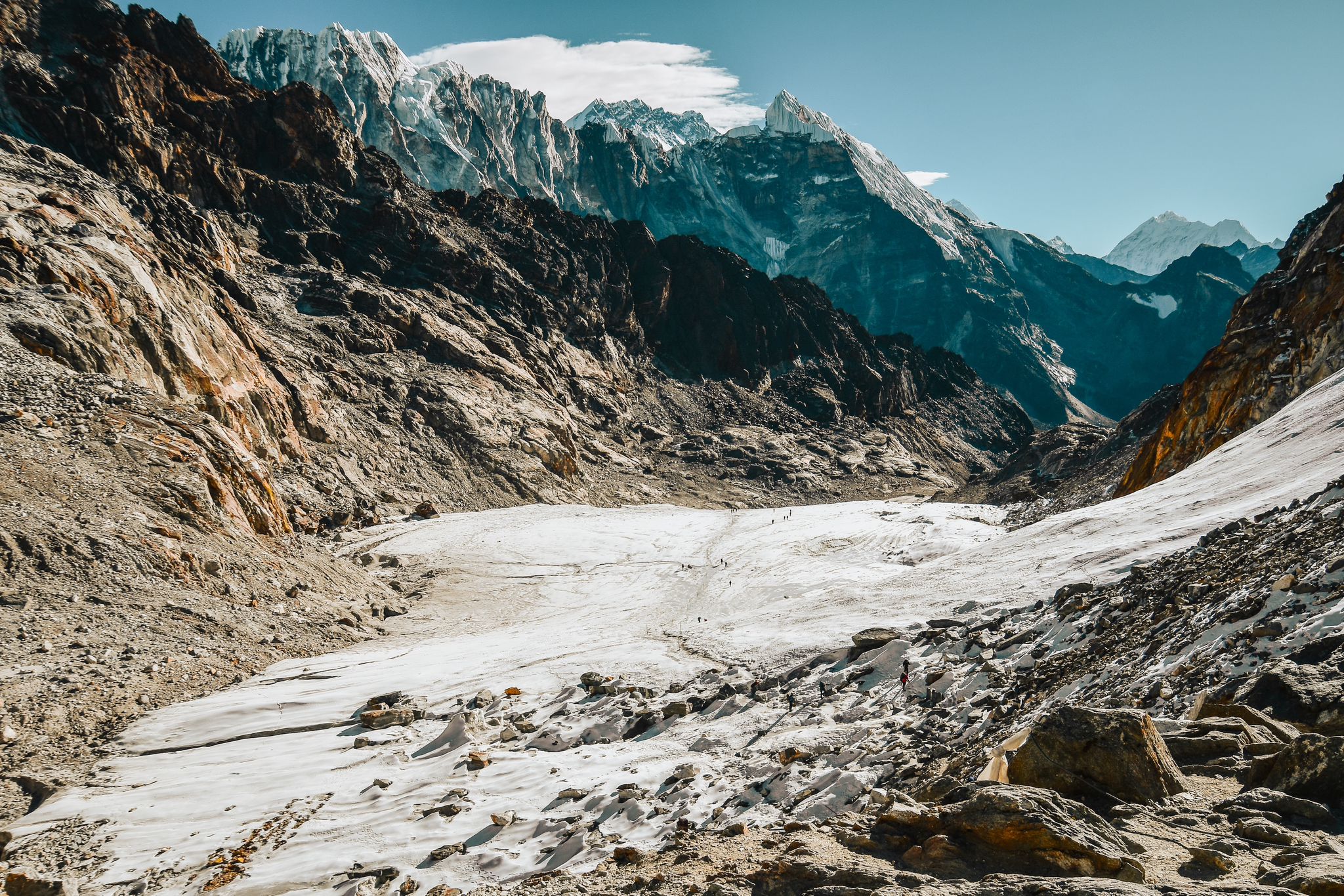
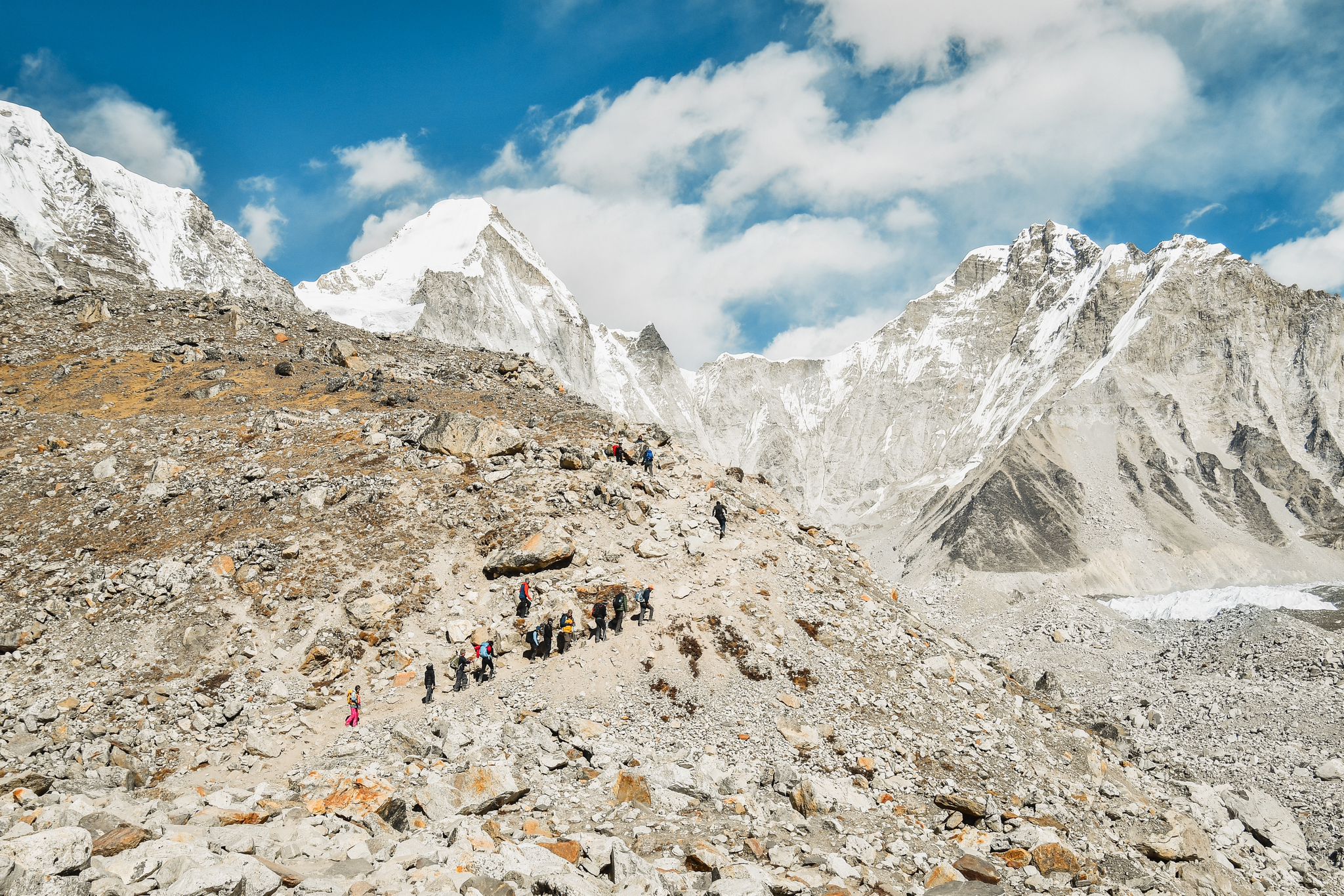
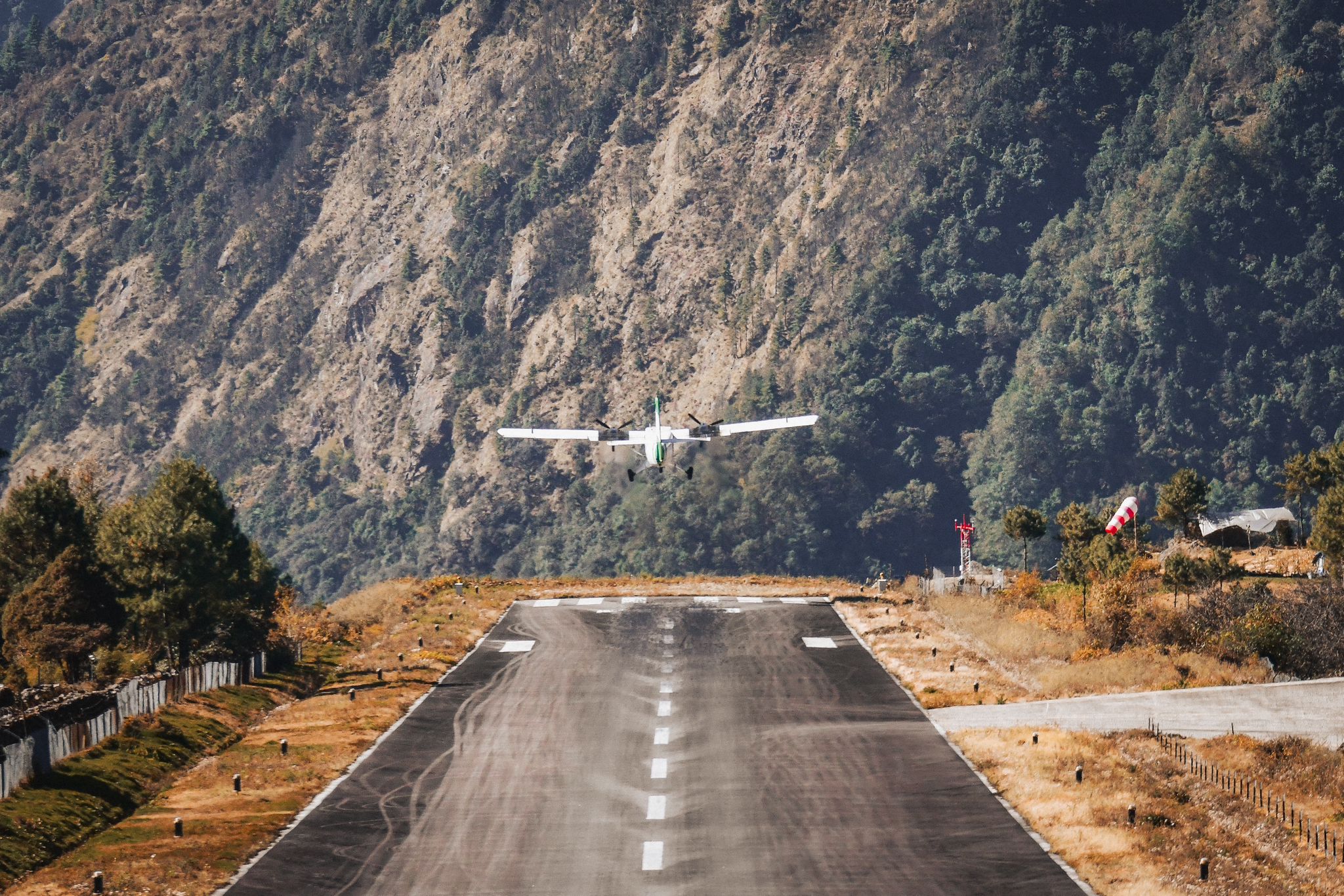
“Walking at the foot of world's highest Mt. Everest within Ice Falls and glaciers An adventure with daily scenic views of high peaks with impressive Sherpa culture Flying in and taking off on unique Lukla airstrip with sweeping mountain panorama Within World Heritage Sites of Sagarmatha National Park and its cool alpine woodland Explore native Sherpa villages adorned with interesting Buddhist monuments and monasteries Adventure in the heart of Mt. Everest with climb of high and scenic Kalapathar hill top.”
NOTE: This is 11 nights and 12 days of trekking(KTM TO KTM) which doesn't include arrival, sightseeing, and departure days. Or extra days want to spend in Nepal don't include porter as well for one pax.
MAJOR HIGHLIGHTS:
- Embark on an unforgettable adventure to Everest Base Camp, at the foot of the iconic Mt. Everest.
- Soar above the Himalayas with breathtaking aerial views on your flight to Lukla.
- Immerse yourself in the pristine wilderness of Sagarmatha National Park.
- Explore Namche Bazaar, the vibrant gateway and cultural hub of the Everest region.
- Experience the rich traditions and hospitality of the Sherpa community.
- Marvel at panoramic mountain vistas from Hotel Everest View, the world’s highest-placed hotel.
- Visit the historic Tengboche Monastery, the oldest in the Everest region.
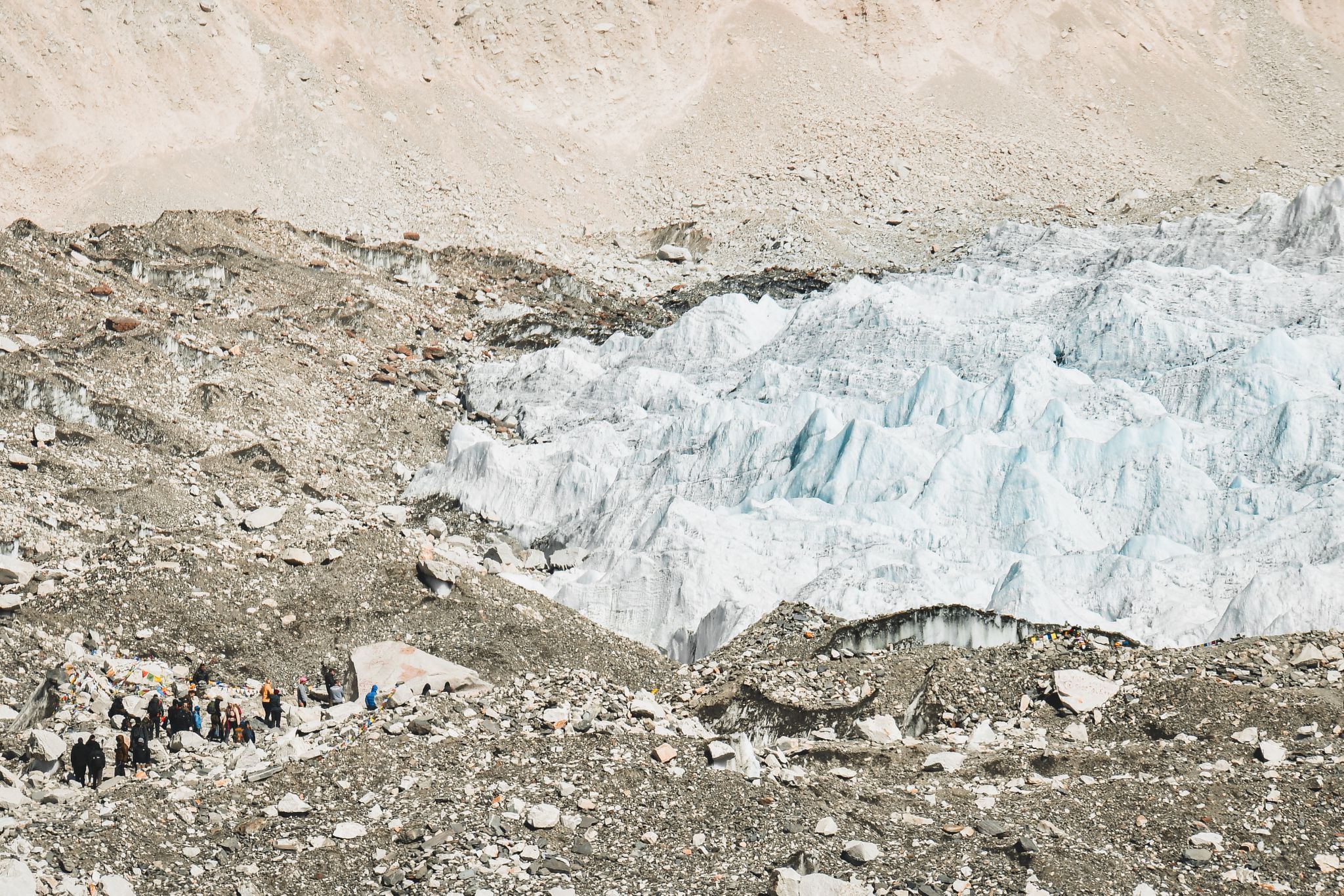
- Witness the awe-inspiring Khumbu Glacier and Khumbu Icefall up close.
- Enjoy scenic treks to Kala Patthar (5,555 m) and Nangkartshang Peak (5,083 m).
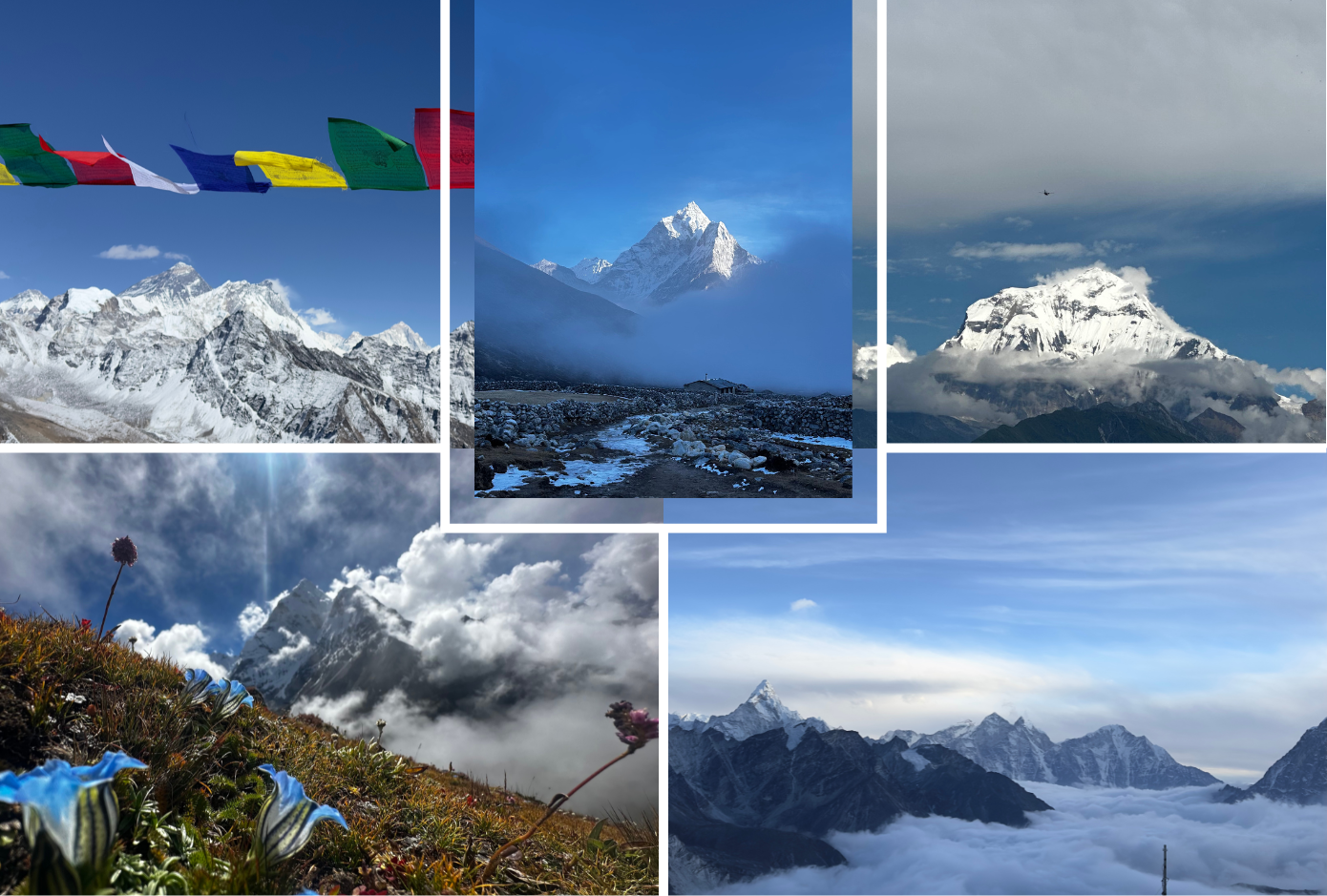
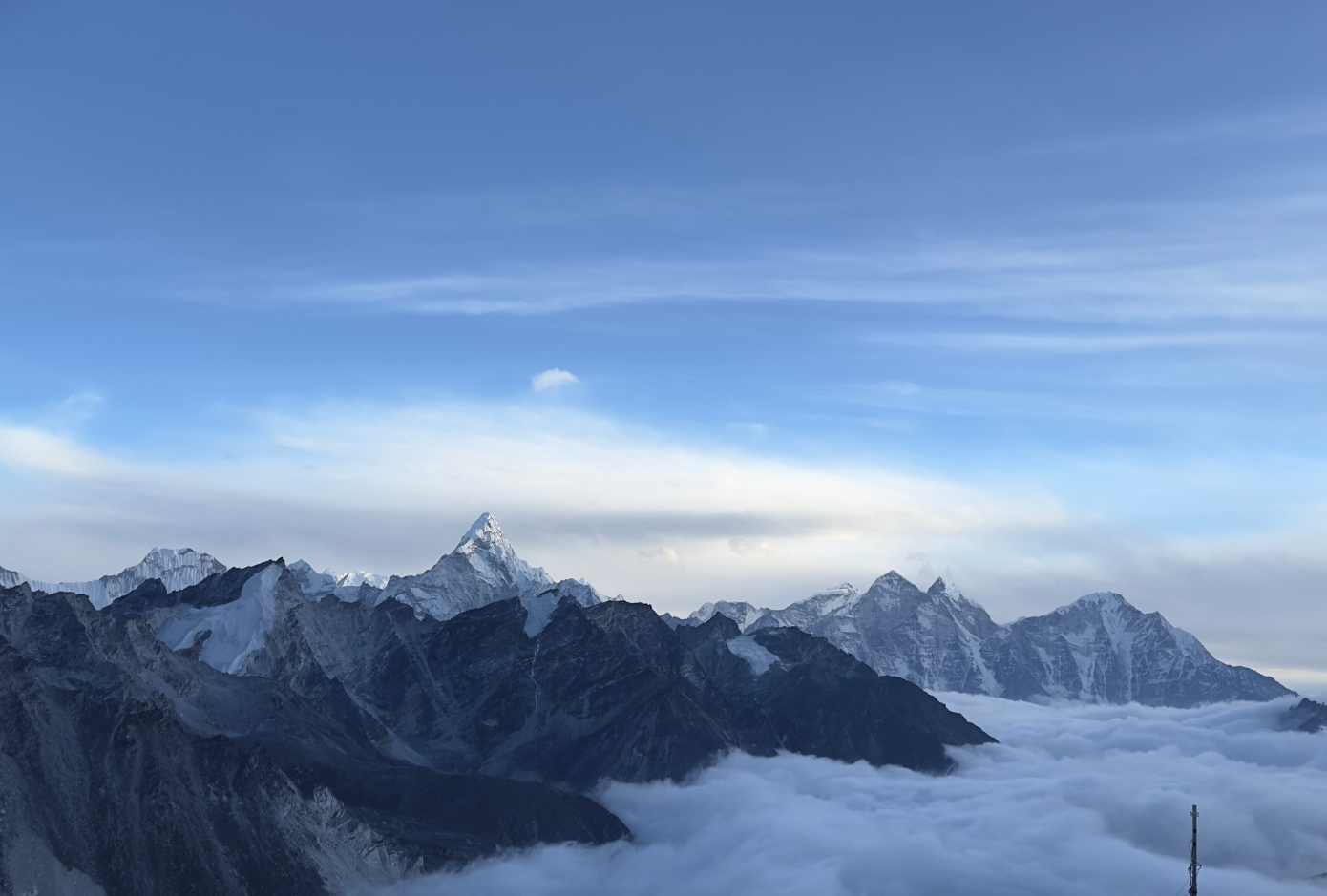
- Take in stunning views of Mt. Everest and neighboring peaks, including Ama Dablam, Lhotse, Nuptse, Thamserku, Cho Oyu, and more.
Mode of Trekking:
challenging terrain
Trek Grade:
challenging and Adventurous due to the high altitude and terrain.
Area of Trek:
North Mid-East of Nepal Sagarmatha National Park in Khumbu district of Nepal.
People and Culture:
Mainly populated by Sherpa (people from est) the highlanders of Everest. Enriched with colorful Buddhist religion and impressive culture.
Trek Duration:
11 Nights and 12 Days (ktm to ktm)
Average walks:
Minimum 4 hrs to Maximum 8 hrs or more.
Total Trip:
11 Nights and 12 Days from Kathmandu to Kathmandu.
Seasons:
All months of the year except monsoon times from June to August, and March to May are good for treks when wild-flowers in full bloom, where most of the days are clear for views Morning and Night time as well in shade will be cold without wind-chill factor, October to December another best months to trek when the day is clear, but short sunlight hours due to autumn and winter months will be very cold morning/night times with chances of snow.
INTRODUCTION - EVEREST BASE CAMP TREKKING
Everest Base Camp Trekking, where your dreams and fantasy turn into reality joins Mount Vision Treks in our scenic and cultural high-altitude walks to the world’s number one mountain base camp.
Everest Base Camp Trekking offers great photogenic scenery with daily views of high snow-capped peaks in the backdrop of local Sherpa impressive colorful customs and culture that fascinates you on the wonderful adventure.
Mt. Everest listed as the world’s highest mountains rises above 8,848 m and 29,028 ft high and straddles the border between two countries with the northern side in Tibet/China and the Southern Face with Nepal, where most of the trek and expeditions are done from Nepalese side of Everest within high and beautiful Khumbu valley.
Mt. Everest is a mountain of great respect and as well with several local names Sagarmatha in Nepal, while Sherpa and Tibetan call as Chomolungma meaning Great Mother in both native languages.
The history of Mt. Everest comes from the British East India Company located in Kolkata of West Bengal state of India, where the name was christened tribute to the late Sir George Everest way back in the mid-1940's before it was known as Peak XIV.
The first climb to Everest from Tibet side by British Expeditions in early 1921 led by Irving and Mallory whether they made it or not remains a great mystery in mountaineering history, then later in May 29th 1953 where British Expedition led by the late Sir John Hunt with legendry mountaineers Tenzing and Hillary conquered the summit of Mt. Everest.
Since then Everest from Nepal has been highly exposed and made famous, as you will see on this walk visiting and staying in nice good lodges and villages on well established Everest Base Camp Trekking.
Starting our adventure at Everest Base Camp Trekking take a scenic flight from Kathmandu to Lukla, where the walk begins into the high Khumbu valley as our route takes you past many interesting Sherpa villages in the shade of mighty Khumbu Himal peaks.
Walking into Dudh Kosi River valley and gorge soon to enter the large village and town of Namche Bazaar where trekkers can find many facilities required for the trek around the Khumbu area, at Namche with a rest day to support acclimatization before heading to higher country.
From Namche walk leads on a scenic wide trail for some times facing views of snow-clad peaks with Everest and majestic Amadablam as our route leads downhill and then ups into the serene alpine forest of tall rhododendron-oaks-magnolia-blue pines and silver fir to reach a small scenic plateau at Thyangboche.
A beautiful spot with a colorful monastery worth a visit inside the religious sites surrounded by an array of peaks with views of Mt. Everest and forest, where the walk leads past tree lines into barren and windswept terrain as our route approaches to high areas at Everest Base Camp.
Enjoy terrific views of the mighty peaks that surround at base camp situated close to Khumbu Ice Falls and glaciers, after an exciting moment reach our main highlight of the adventure then climb up to scenic Kalapathar view tops at above 5,545 m the highest point of the trek.
From Kalapathar surrounded by great peaks with Mt. Pumori and Mt. Everest at a mere distance then head downhill towards Namche Bazaar as the walk continues reaching back to Lukla for a scenic air journey to Kathmandu, after a fabulous and memorable experience and adventure on Everest Base Camp Trekking.
PACKING LIST FOR EVEREST BASE CAMP TREKKING
Here’s a list of essentials you may want to pack for your Everest Base Camp trek. Consider this as a starting guide, keeping in mind the need for additional warm layers during the winter season.
General
- Four-season (zero-degree) sleeping bag
- Sleeping bag liner
- Puffy down jacket
- Daypack (35-45 liters recommended) with rain cover
Upper Body
- Sun hat or cap
- Knitted hat/Beanie
- Scarf/Neck Gaiter/Buff (highly recommended)
- Headlamp
- Sunglasses
Torso
- Technical fabric base layer (light for warmer months, heavy for colder months)
- Technical fabric short (2) and long sleeve (2) shirts
- Waterproof, windproof shell
- Fleece jacket or pullover
Lower Body
- Technical fabric base layer (light for warmer months, heavy for colder months)
- Hiking pants (2)
- Comfortable pants for inside the teahouses
- Waterproof, windproof shell
- Hiking shorts
Hands
- Wool or technical fabric liner gloves
- Hard-shell outer gloves (insulated for colder months)
Feet
- Wool or technical fabric warm socks
- Hiking socks
- Liner socks (optional such as silk)
- Trekking/hiking boots (waterproof recommended)
- Ice Cleats /Micro Spikes (For trekking from November to March, it's recommended to include Ice Cleats/ Micro Spikes to prevent slipping on icy or wet surfaces.)
- Casual shoes
- Gaiters (lightweight for dust or heavy for snow in colder months)
Undergarments
- Technical fabric/quick drying is best for underwear (opportunities to launder during the trip)
- Sports bras (women)
- Pajamas or sleeping clothes
First Aid Kits and Medications
- (Note: Guides carry medications and first aid kits during the trip. However, personal kits and medications are highly recommended.)
- Sunscreen
- Lip balm
- ointment
- Cough Syrup (recommended for Khumbu Cough)
- Mosquito repellent cream (for Kathmandu and Phakding)
Other Essentials
- Passport
- Extra copies of passport-sized photos
- Reusable water bottle
- Toiletry kits
- Water purification tablets or UV water purifier (if you plan to treat water)
- Hydration bladder
- Towel
- Pillowcase
- Toilet paper (2 rolls)
- High-protein snacks (such as protein bars or nuts)
- Waterproof/dry bags for carrying important documents and money
- Airline tickets (Please leave a copy at our office in Kathmandu. This can be useful if there is a change in the date of the flight.)
Optional
Upon arriving in Nepal, you’ll have the opportunity to purchase hiking gear and supplies if time allows. Our guide will be happy to assist you with selecting the necessary equipment. Thamel, Kathmandu’s bustling tourist hub, features a wide variety of trekking gear available at reasonable prices.
- Power bank or extra batteries
- Cameras and mobile phone
- Cards/book
- Binoculars
- Pee bottle/ pee funnel for women
- Trekking poles
- Whistle
- Thermos for hot water
Included/Excluded
Three times meals (breakfast,lunch,dinner) breakfast with hot drinks . accommodations during trekking tea house basis
transportation (airport pick up and drop )
kathmandu - lukla or manthali lukla two way flight and guide flights as well
required documents for trekking like permits and staffs insurance
duffels bags , sleeping bags , down jackets if you needed
first aid box , water purified pills
yours nepali visa , hotel in kathmandu , travel insurance
Bar bills and extra hot drinks extra foods , drinking water
wifi, hot showers, local entrance fees, donations, mobile or power bank charge
tips for guide and porters (expected)
Itinerary
Day 1
FLY TO LUKLA(2850) FROM KTM OR MANTHALI
Day 1
FLY TO LUKLA(2850) FROM KTM OR MANTHALI
Morning at the earliest before or after quick breakfast or one carry pack breakfast to save time reaching at Kathmandu domestic airport terminal, where a short scenic flight of 35 minutes reaches you at Lukla, a gateway Sherpa town at the height of 2,820 m high facing views of Nupla and kyarlung peak
With refreshing stop at Lukla then follow our lead guide after adjusting baggage with porters to carry or on pack animals (Jopkyo a mix breed of normal cow and Yak).
As walk leads past Lukla town heading down to Chiplung small village and then around Dudh-Kosi River valley and gorge towards our first overnight stop at Phadking village near Dudh-Kosi a glacial river. (4-5 hours) dis 8 km
DAY 2
TREK TO NAMCHE BAZAAR 3,440m - (6-7hrsS)
DAY 2
TREK TO NAMCHE BAZAAR 3,440m - (6-7hrsS)
Morning begins with gradual walk following Dudh Kosi river upstream past several Sherpa nice villages with short ups and down and then crossing a long suspension bridge to Monjo village, where Sagarmatha National Park starts entering into park areas past Jorsalle the last village before Namche Bazaar.
From Jorsalle crossing bridge and into serene woodland of tall pines and rhododendron trees with climb on winding trail facing views of Kongde, Kusum Khanguru and Tharmasakru peaks as walk brings you into famous Namche Bazaar, which is more of a town rather than village we can call mini thamel in mountain before tourism namche bazaar was a trading hub for people's with many good restaurants, hotels, lodge having number of shops and stores includes Bank and Post-Office.
At Namche enjoy the comfort of nice cozy lodge, facing great views of snow capped peaks the closest lies Kongde peaks. (7-8 hours) 12 km
DAY 3
ACCLIMATIZATION DAY AT NAMCHE TREK TO EVEREST VIEW HOTEL
DAY 3
ACCLIMATIZATION DAY AT NAMCHE TREK TO EVEREST VIEW HOTEL
At Namche rest day for acclimatization before heading higher area, where short hike up to view point like towards Everest View Hotel takes nearly 4-5 hours both ways, along the way we can visit sagarmatha next which is newly built and they turn grabage in to the arts offers excellent panorama of mountains with Everest and magnificent Amadablam
In Namche visit museum where you can gain knowledge of Khumbu Sherpa, culture, flora-fauna as well of mountaineering expedition history with rest of the afternoon at leisure.
Day 4
NAMCHE TO TENGBOCHE (3890)
Day 4
NAMCHE TO TENGBOCHE (3890)
Max. Altitude: Tengboche (3,860 m) Duration: 6-7 hrs trek 10 km.
The trail to Tengboche is rocky. The route descends early in the day and then climbs up to Tengboche.
Begin the trek advancing along the Dudh Koshi River. Witness the enchanting sight of the mountains along the way. Advance to Phungi Thenga, passing through lovely rhododendron forest.
On moving further, you arrive at Tengboche with an astonishing view of Mt. Everest, Ama Dablam, Lhotse and Nuptse. The stunning views of lush rhododendron forest, glacier, rivers, and monasteries along the EBC trail is rewarding.
After arriving in Tengboche, we visit the Tengboche Monastery and observe Lamas performing a prayer ceremony either in the morning or evening.
DAY 5
TREK TO DINGBOCHE (4410)
DAY 5
TREK TO DINGBOCHE (4410)
Max. Altitude: Dingboche (4,410 m) Duration: 5-6 hrs trek 10 km.
After spending a night in Tengboche, we head for Dingboche in the morning. The trek moves on to Deboche through the rhododendorn forest, after pangboche we can see moe like alpine junifer and we cross Imja Khola via a suspension bridge. On the way, we come across a wall inscribed with stones.
Later in the day, you will be rewarded with a captivating view of Ama Dablam. Ama Dablam means "mother's necklace" in Sherpa. which are said to resemble a mother's arms protecting her child: After we ascend to the village of Pangboche and follow the trail leading to Imja Valley. At long last, we reach Dingboche village after making an ascent.
DAY 6
Aacclimatization day at 4410 mtrs
DAY 6
Aacclimatization day at 4410 mtrs
this is an other required acclimatization after namche bazaar . after breakfast we hike to nagartchen peak (5100 mtrs) it will be great if we reach all the way to top otherwise we can do up to 4800 mtrs then return back to tea house then do rest from the top we can have almost 360 views of mountains like Ama dablam, (6812mtr) tobuche (6490 mtr) thamsherku (6600mtr) kangtega (6700) ama dablam (6812mtr) makalu (8485mtr) island peak(6194mtr) Cholatse (6440mtr)
DAY 7
DINGBOCHE TO LOBUCHE (4990)
DAY 7
DINGBOCHE TO LOBUCHE (4990)
Trek to lobuche will be tough after thukla (4670mtr) till thukla the way is easy and mountain flat from thukla to memorial place will be uphill and rocky after memorial place to lobuche will be comfortable walk, memorials are constructed in the memory of the departed souls of climbers, adorned by colorful prayer flags. After a brisk hike, we arrive in Lobuche village. The massive mountain vistas of Nuptse, Lobuche, and Pumori ( pumo means daughter nad ri means mountain also called daughter of everest) can be seen from the village.
DAY 8
LOBUCHE TO GORAKSHEP(5170) THEN HIKE TO EBC.(5364)
DAY 8
LOBUCHE TO GORAKSHEP(5170) THEN HIKE TO EBC.(5364)
Max. Altitude: Everest Base Camp (5,364 m), Gorak Shep (5,190 m) Duration: 8-9 hrs trek.
Today there are two sections of the EBC trek. First, the trail follows the route to Gorak Shep and then to Mount Everest Base Camp.
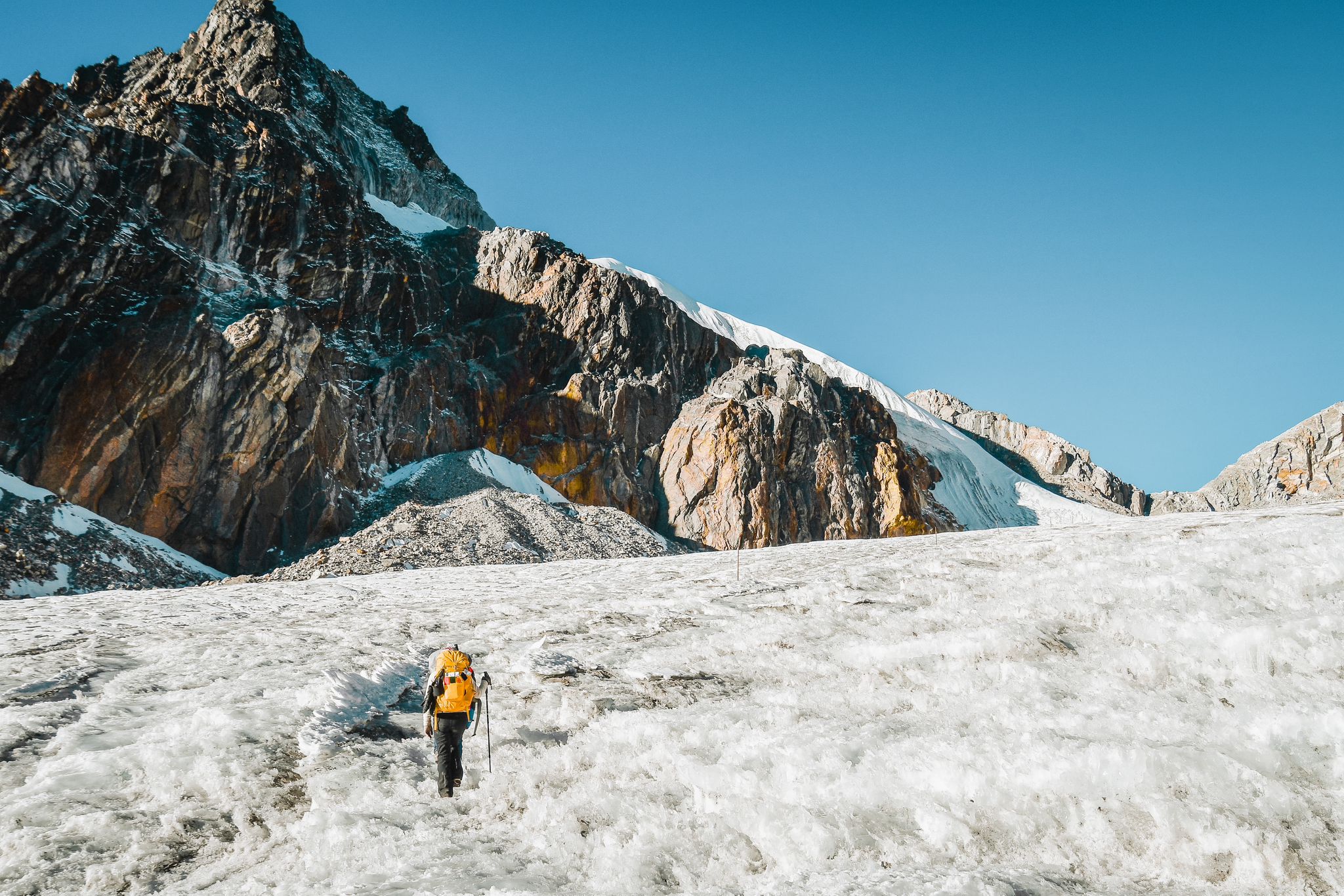
After having breakfast, we leave Lobuche, hiking along the Khumbu glacier while enjoying the magnificent view of Mt. Nuptse, mt.pumori, lingtrn, changtche , khumbusthe. Soon we reach the village of Gorak Shep.
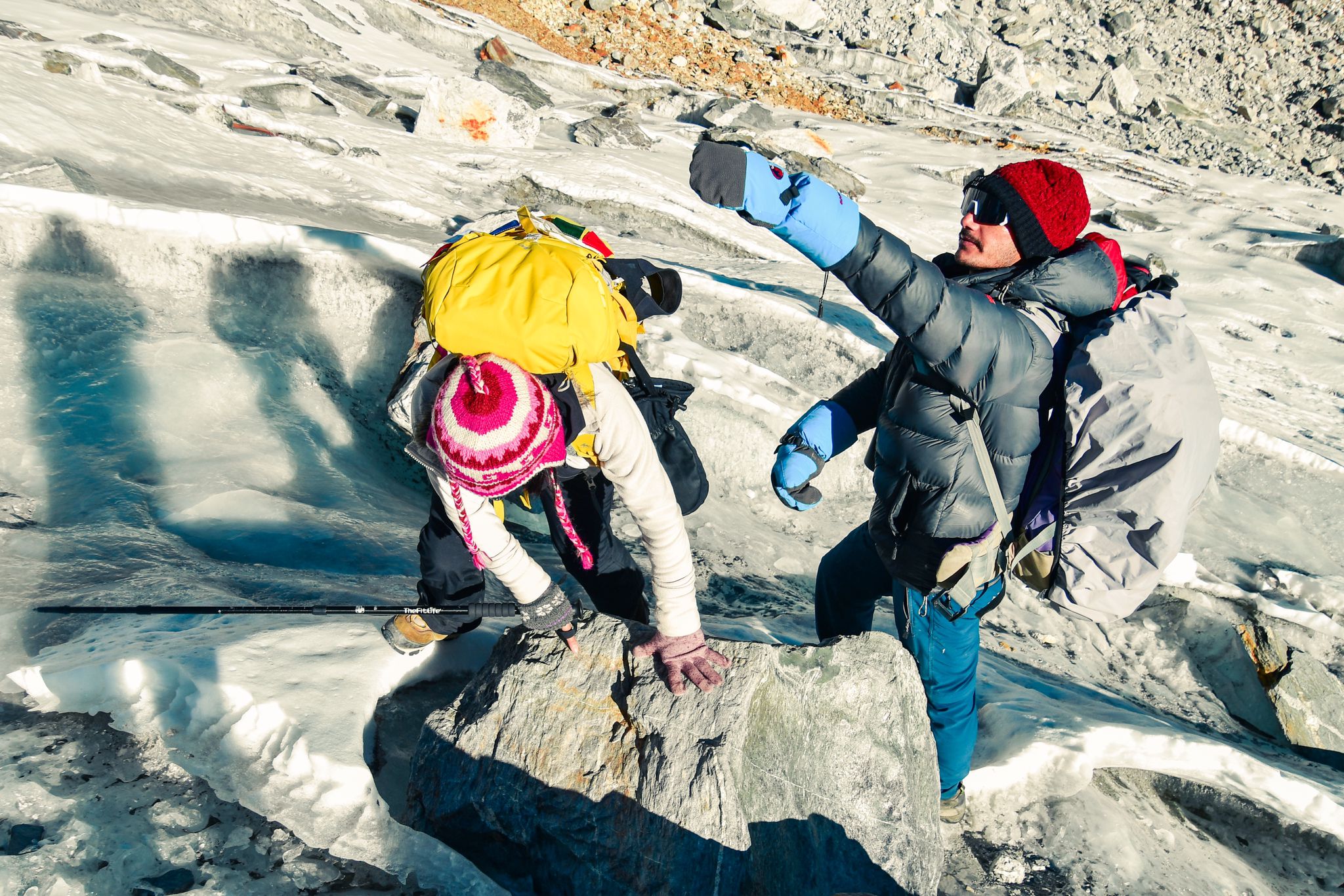
From this point, we continue our trek all the way to Everest Base Camp. The trail ahead is challenging as it is rugged terrain. The captivating view of Khumbu Glacier and Khumbu Icefall is visible along the way.
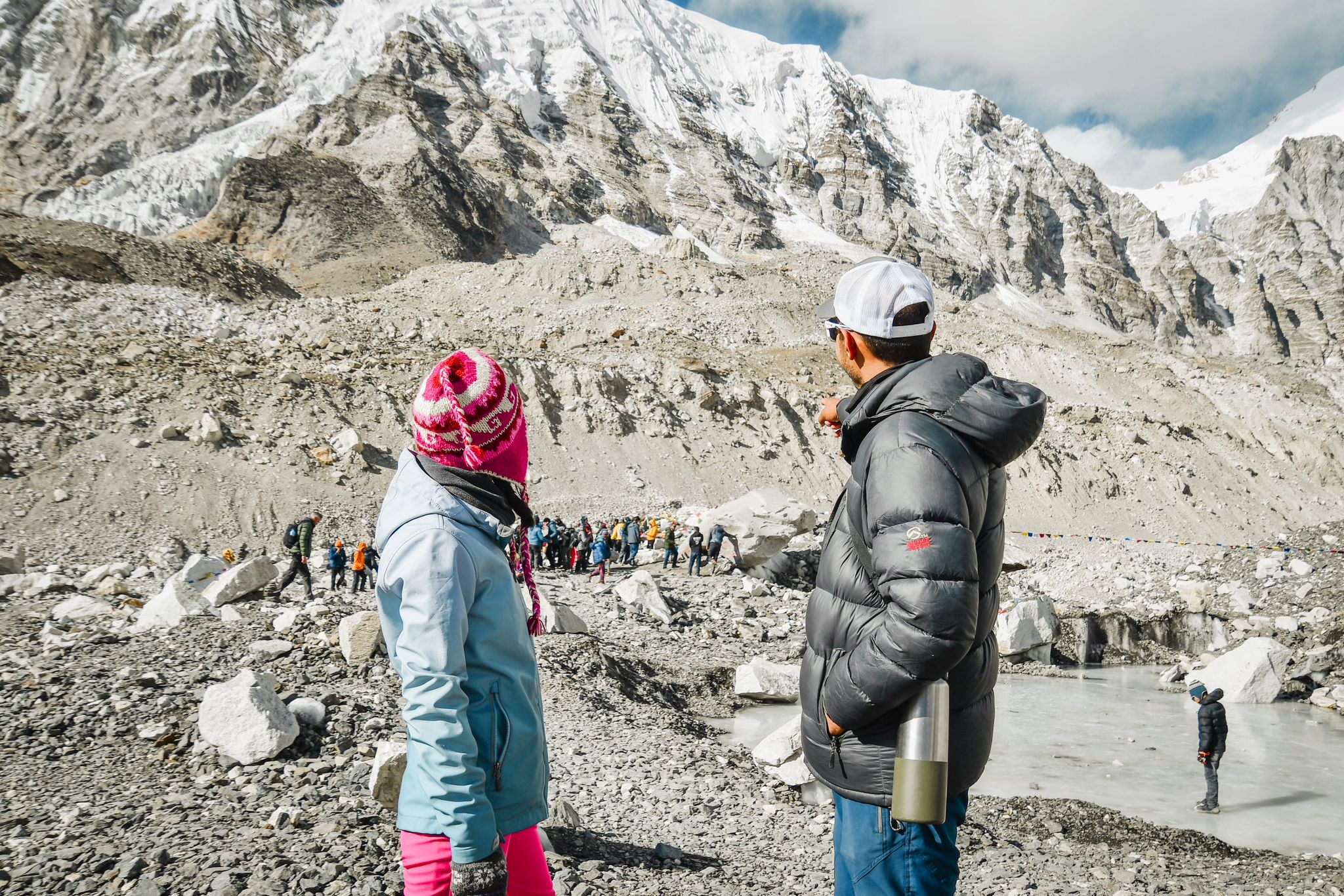
Once we reach base camp, you will be rewarded with a panoramic view of Mt. Everest, Nuptse, Pumori, Khumbutse, and surrounding peaks. It’s a great feeling to be present at the base of the world’s highest mountain.
In addition, we may encounter expedition teams and climbers during peak seasons. We then retrace the path back to Gorak Shep.
DAY 9
GORAKSHEP TO PHERICHE (4400)
DAY 9
GORAKSHEP TO PHERICHE (4400)
Max. Altitude: Kalapatthar (5,555 m), Pheriche (4,240 m) Duration: 7-8 hrs trek.
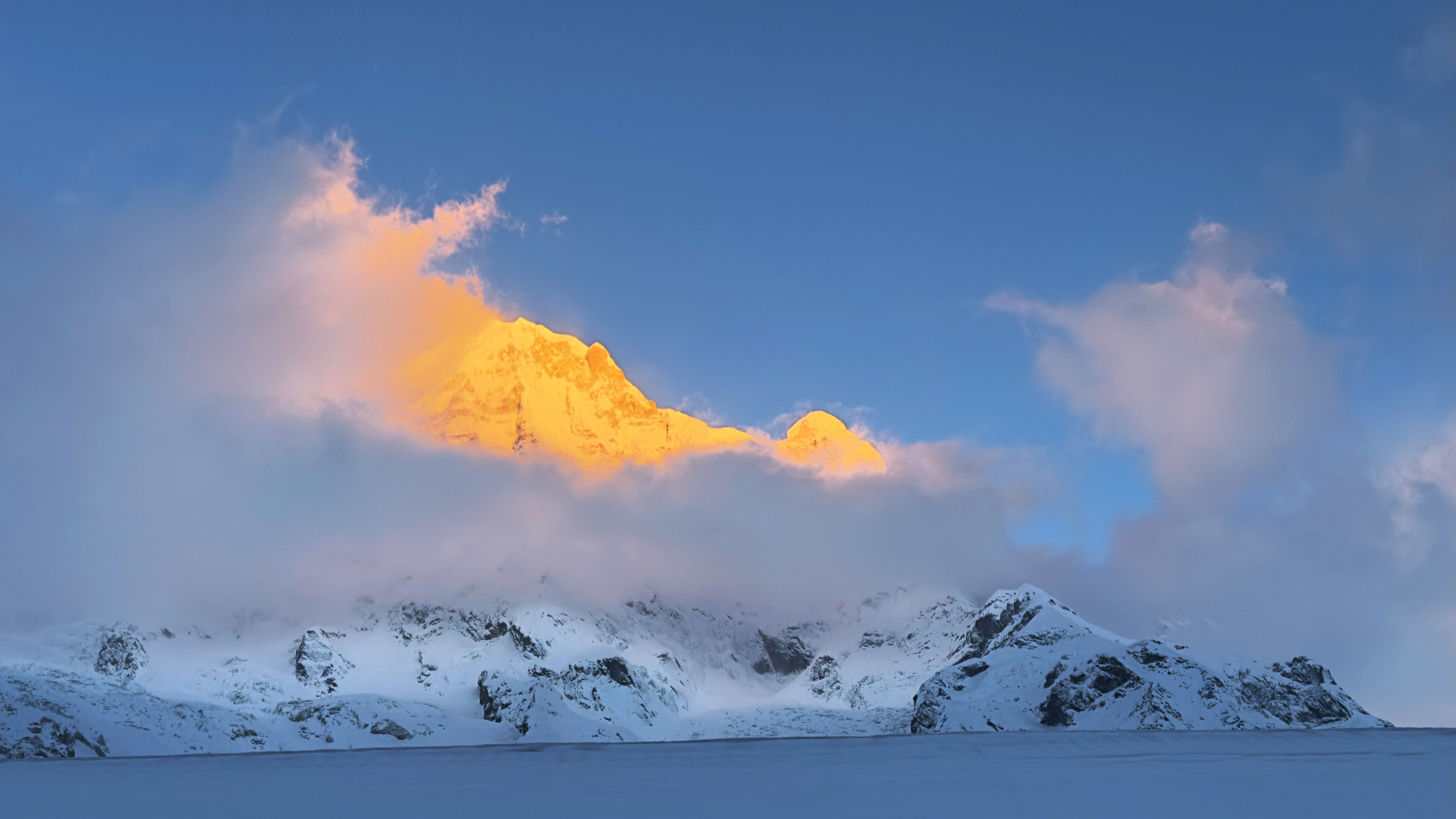
Today we hike to the highest point of the Everest Base Camp Trek, Kala Patthar. The hike begins very early in the morning with a breathtaking sunrise view over the giant mountains.
Kala Patthar is an excellent vantage point for the incredible view of Lhotse, Nuptse, Pumori, and Mount Everest.
Embrace every moment of joy and sensational feelings you experience while in Mount Everest’s lap. After enjoying quality time, we make our way down to Gorak Shep and resume our EBC trek following the route down to Pheriche or pangboche village.
DAY 10
PHERICHE TO NAMCHE
DAY 10
PHERICHE TO NAMCHE
Max. Altitude: Namche Bazaar (3,440 m) Duration: 7-8 hrs trek.
After a hearty breakfast, we move down to Namche, hiking along the trail we had taken earlier. As the trek progresses, we come across Pangboche village, following Tengboche village.
We cross a suspension bridge and enter the forest trail hiking until we arrive in Namche Bazaar.
DAY 11
NAMCHE BAZAAR TO LUKLA
DAY 11
NAMCHE BAZAAR TO LUKLA
Max. Altitude: Lukla (2,840 m) Duration: 7-8 hrs trek.
The adventure of hiking Everest Base Camp ends today once we reach Lukla. We leave Namche Bazaar for Lukla after breakfast. Since this is your last day in the Everest region, take a walk around the village.
Enjoy and celebrate the lifelong moments made along trails of the region.
DAY 12
LAST DAY FLY TO KTM OR MANTHALI
DAY 12
LAST DAY FLY TO KTM OR MANTHALI
Lukla to Manthali Flight (March, April, May, September, October, and November)
The flight from Lukla to Manthali is a 20-minute flight. After that, it is about a 5 to 6 hour drive to Kathmandu. Please note that the driving hours may vary according to the highway traffic condition. You’ll be transferred to the hotel in Kathmandu on a shared tourist vehicle.
Lukla to Kathmandu Flight (January, February, June, July, August and December)
The flight from Lukla takes about 35 minutes. After arriving at the airport, you will be transferred to the hotel in Kathmandu via a shared tourist vehicle. Please be aware that the decision regarding the operation of flights solely depends on the airline and is influenced by the volume of travelers during a specific month.
Helicopter Option Helicopter Option
You have the option to book a direct helicopter flight from Lukla to Kathmandu for an extra charge of USD 550 per person. This price is quoted on a 5-people sharing basis. This is the best alternative to avoid the long drive to from Manthali airport to Kathmandu during peak season (March, April, May, October and November).
If you would like to spend more time in Nepal, we offer trips to popular destinations in Nepal. Pokhara tour, Chitwan National Park, Kathmandu Cultural Heritage Tours, etc., are some of our popular Nepal trips. In addition, we also provide outbound tours to Tibet, India, and Bhutan.
You will be served a farewell dinner in a fine restaurant.
Travel Styles
Cultural
Nature & Adventure
Activities
Festival & Events
Special Interest
FAQs
What are the major attractions of the EBC?
Beautiful sweeping views of Mount Everest and other Himalayan peaks, including Mt. Lhotse (8,516m), Cho Oyu (8,201m), and Mt. Makalu (8,463m), can be seen on the Everest Base Camp Trek. Khumbu Glacier, Kalapattar, Lukla Airport, Sagarmatha National Park, and the base camp are other points of interest. While traveling, we suggest stopping at nearby monasteries, such as Tengboche Monastery.
Can the EBC be finished in a short amount of time?
Although it is technically feasible, we advise individuals who are extremely fit to go on a little hike. In order to allow for adequate altitude acclimation, the typical journey lasts fourteen days. The Everest Base Camp journey can be finished in ten days if you are in excellent physical shape. Additionally, the Everest Base Camp excursion can be finished in a single day by helicopter.
Is EBC difficult for beginners?
The EBC Trek is regarded as a trek that is moderately difficult. Technical climbing abilities are not required, although prior hiking experience and a healthy level of fitness are helpful but not required. A few months prior to your departure date, you can get ready for the voyage if you're not feeling well.
Which aspects of the EBC's culture stand out?
You will get a close-up look at Sherpa culture on the Everest Base Camp hike. As you travel through traditional Sherpa communities like Namche Bazaar, Tengboche, and Khumjung, you'll get a glimpse of the local way of life and how they relate to the mountains. See monasteries like the well-known Tengboche Monastery, where you may get a sense of the area's spiritual side through Buddhist prayers and rituals. In tea houses, you can converse with locals and discover more about their history, customs, and cuisine.
How crowded is EBC?
The popularity of the journey fluctuates throughout the year. While shoulder seasons (December, January, February, June, July, and August) provide a more tranquil experience, peak seasons (March–May and September–November) are busier.
What are the age restrictions for EBC Trek?
Although there isn't a set age restriction, those between the ages of 16 and 70 are usually advised to participate in the walk because of its physical demands. However, elder hikers can successfully finish the walk if they are in good condition and fit.
Do I need training for the EBC?
You may hike to EBC with a typical level of fitness, but the more fit you are, the more fun the trek will be. To improve your endurance and stamina, we therefore suggest that you regularly perform strength training exercises like squats and push-ups as well as cardiovascular exercises like swimming, cycling, and jogging.
How to prepare for EBC?
Prioritize strengthening your legs, increasing your cardiovascular fitness, and practicing with a backpack. You should allow a few days for acclimatization and pack sensibly. We will advise you on what to pack if you hike with us.
How to acclimate to high altitude quickly?
The basic tenet of acclimatization is that you must increase gradually so that your body has time to adapt to lower oxygen concentrations.
How long do I need to walk per day during my trek to EBC?
Although the daily walking distances vary, you should expect to hike for six to eight hours each day. Days are set aside in our hike program for acclimation if needed.
What is altitude sickness?
Altitude sickness, also known as acute mountain sickness (AMS), occurs when the body struggles to adjust to low oxygen levels at high elevations. Symptoms include headaches, dizziness, nausea, and shortness of breath. It typically affects individuals ascending too quickly above 2,500 meters (8,200 feet) without proper acclimatization. Severe cases can lead to life-threatening conditions like high-altitude pulmonary edema (HAPE) or high-altitude cerebral edema (HACE). Preventative measures include gradual ascent, staying hydrated, and acclimatization breaks.
Symptoms of AMS?
Headache (most common symptom)
Dizziness or lightheadedness
Nausea and vomiting
Loss of appetite
Fatigue and weakness
Difficulty sleeping (insomnia)
Shortness of breath with exertion
How to prevent altitude sickness?
1.Gradual Ascent
Ascend slowly to allow your body to adjust to lower oxygen levels.
Avoid climbing more than 300-500 meters (1,000-1,600 feet) per day above 2,500 meters.
Take rest days every 3-4 days at high altitudes.
2. Hydration and Nutrition
Drink plenty of water to stay hydrated.
Avoid alcohol, caffeine, and smoking as they can worsen dehydration.
Eat carbohydrate-rich meals to maintain energy levels.
3. Acclimatization
Spend a day or two at moderate altitude before ascending higher.
Follow the "climb high, sleep low" rule – hike to higher elevations during the day but sleep at a lower altitude.
4. Medications
Acetazolamide (Diamox) can help speed up acclimatization. Consult a doctor before use.
Pain relievers like ibuprofen can help with mild symptoms.
5. Listen to Your Body
If symptoms of AMS appear, descend immediately to a lower altitude.
Do not push yourself if you feel unwell – ignoring symptoms can lead to severe complications like HAPE or HACE.
What are the permits required for EBC Trek?
You will require two major permits for the Everest Base Camp trek: Sagarmatha National Park Entry Permit and Khumbu Pashang Lhamu Rural Municipality permit.
Where can I get the necessary papers for EBC Trek?
The Sagarmatha National Park Entry Permit and the Khumbu Pashang Lhamu Rural Municipality Permit are the two main permits needed for the Everest Base Camp hike.
How to get a visa for Nepal?
Upon arrival at Kathmandu's Tribhuvan International Airport, visas are available for the majority of nationalities. A passport with at least six months left on it, a passport-size photo, and the visa application cost are required for an on-arrival visa. The period of stay determines the application fee. Currently, a 30-day stay costs $50 USD. For further information, please visit (https://www.immigration.gov.np/en.)
What insurance do we need for EBC?
At the greatest hike altitude (5,550m), you will want complete travel insurance that should cover medical and helicopter evacuation fees. Please make sure that your insurance covers helicopter rescue by giving your company a call. Don't only trust the information provided by insurance on their website.
Do I need travel insurance to trek for EBC?
Yes, travel insurance is mandatory due to the inherent risks involved in the trek. We reserve the right to refuse your trek if you are not adequately insured.
Is hiring a guide required for the EBC trip?
Hiring a guide for the Everest Base Camp (EBC) trek is not mandatory, but it is highly recommended, especially for first-time trekkers. Here’s what you need to know:
Solo Trek vs. Guided Trek
Solo Trekking: You can trek independently as long as you obtain the required permits (Sagarmatha National Park Permit & Khumbu Pasang Lhamu Rural Municipality Permit). However, solo trekking can be challenging due to high altitude, unpredictable weather, and route navigation.
Guided Trekking: Hiring a licensed guide provides safety, assistance with acclimatization, and cultural insights. Guides also help in case of emergencies and handle logistics like accommodations and permits.
Do I Need a Porter?
A porter can carry your heavy backpack (typically up to 20-25 kg) so you can trek comfortably with a light daypack. This is beneficial for those not accustomed to high-altitude trekking.
Is a Guide Compulsory in Nepal?
As of April 1, 2023, Nepal banned solo trekking in restricted areas and requires trekkers to hire a guide. However, the EBC trek is not a restricted area, meaning solo trekking is still allowed.
Why Hire a Guide?
Safety: Helps in case of altitude sickness or emergencies.
Navigation: Ensures you stay on the right trail.
Cultural Experience: Guides provide insights into local Sherpa culture.
Logistics: Handles permits, accommodations, and food arrangements
Do I need to tip my guide and porters?
Tipping is accepted in Nepali culture and is a way to thank for the service. However, tipping is at your discretion.
What accommodation do you get on the EBC?
We provide accommodations in the best possible lodges in the trek regions. You will be staying in standard rooms (twin sharing basis).
Is Wi-Fi available during the trek?
Wi-Fi is available in most teahouses/lodges, but you need to pay an extra fee to use it.
Throughout the journey, will there be a power supply available for charging devices?
There is electricity in trek areas. In the tea houses or lodgings where you will be staying, you can recharge your devices. To utilize this service, though, you might have to pay a price.
Are there showers available?
You can take showers in the lodges/tea houses where you are staying. However, you may need to pay for the hot water to enjoy hot showers.
What are the facilities available in case of emergencies during the trek?
There aren't many health facilities in trek areas. Basic first aid supplies are carried by our guides. We will plan for an insurance-funded helicopter rescue in case of an emergency.
How is restroom on EBC trek?
On the EBC trek there is both types of restrooms available like western and squat.
I am a vegetarian. Will I get enough meals during the trek?
Indeed. There are vegan and vegetarian options. Because of hygienic reasons, we actually advise against eating non-vegetarian meals in trek areas.
What kind of food do we get during EBC?
In the hike areas, you may enjoy both Nepali and Western food. We suggest that you sample the staple foods of Nepal, such as curry (vegetables), bhat (rice), and dal (lentils). There are also Western foods like sandwiches, pizza, and burgers.
How is the drinking water facility during the trek? Should I bring water purifiers?
Although some trek areas may not permit it for ecological reasons, you can purchase packed water there. We suggest that you purchase boiling or filtered water from the tea houses and bring a water bottle. We can give you water purifying pills if necessary. In some areas, the water from taps, wells, and rivers may not be fit for human consumption.
At high elevations, what kinds of liquids must I consume?
You need to drink more water because your breathing rate is higher at higher elevations. You can take a lot of water, hot lemon, and various teas (green tea, ginger tea). Garlic soup is thought to help prevent altitude sickness. Trekkers are advised by health professionals to abstain from hot chocolate, caffeine, and alcohol at high elevations.
how to use tap water on EBC trek?
Tap water is available at tea houses, lodges, and public taps along the EBC trek, but it is not safe to drink directly due to possible contamination from bacteria, parasites, and sediments. Here’s how you can safely use tap water on the trek:
Use iodine or chlorine tablets (e.g., Aquatabs, Potable Aqua) to purify tap water.
Let the water sit for 30-60 minutes before drinking.
The taste may be slightly unpleasant, so adding electrolyte powders or vitamin C tablets helps.
What is the best season for trekking to EBC?
Trekking conditions are ideal in the spring (March–May) and fall (September–November). The journey tracks are in good shape, the temperatures are at their best, and the skies are clear during these seasons. Trekking is possible in the summer months of June, July, and August, however the monsoon season can provide overcast sky and a lot of rain in the lower trek area. Though the routes may be covered in mounds of snow and the temperatures at high elevations are cold, winter hikes are still feasible.
What is the luggage weight limit for the Lukla flight?
Lukla flights allow 10 kg of luggage and an extra 5 kg as hand-carry, making the luggage weight limit 15 kg
What is the luggage weight limit for a porter?
We let our porters lift no more than twenty to twenty-five kg. They transport two hikers' bags. Therefore, you can only bring 10 kilos of stuff on the walk.
How should I pack for the trip?
You will need two bags for the hike. The porter will require a large, 80L, water-resistant, lockable duffel bag, and you will need a smaller one for yourself to hold valuables and items you will need often while trekking. Together with another counterpart, we suggest that you pack both of your belongings in the porter's larger pack.
Sturdy hiking boots, warm layers, waterproof gear, a sleeping bag, trekking poles, a hat, sunglasses, and sunscreen are all necessities. Essentials include a high-quality backpack, trekking poles, a camera, a water bottle, and a head torch. Please make sure your backpack contains gadgets, valuables, and items you use often.
Where can I buy clothes and equipment?
You can bring clothes and equipment from your country. However, Kathmandu also offers numerous outdoor gear shops that sell essential trek clothes and accessories at moderate prices.
What is the booking and payment method?
We accept a number of payment methods, such as bank transfers, Western Union, Wise, and online payments through our website. Please be aware that in order to finalize the reservation, 10% of the total cost must be paid in advance. When you get to Kathmandu, you can pay the remaining balance using a variety of methods, such as cash, bank transfer, or credit cards.
Is there a cancellation or refund policy?
Yes, we do have a cancellation and refund policy. Please find it here -
Which currency is acceptable along the EBC route?
Only Nepalese Rupees (NPR) are accepted in the Everest Base Camp route. So you must exchange your major currencies (USD, Pound, Euro) in Kathmandu.
How much additional money do I need per day?
We estimate that you will need about $15 USD every trek day to cover hot and cold drinks, food, communications, etc., while the precise amount will vary according on your spending habits.
Can I use ATM and credit cards during the trip?
Although Lukla and Namche Bazaar have ATMs, they are not entirely dependable. We suggest that you carry Nepalese Rupees in the trekking areas and exchange your money in Kathmandu.
Can I book the EBC trip with my kids?
Yes, you can book an Everest Base Camp (EBC) trek with kids, but careful planning is essential to ensure their safety, comfort, and enjoyment. Many families have successfully completed the trek with children as young as 6-8 years old, but the ideal minimum age is 10+ years, depending on fitness and experience.
Why is advance booking recommended for the Everest base camp trek?
Yes, booking in advance is preferred as there are limited flights to Lukla. In busy trek seasons, you might not get accommodations without prior arrangements, However, we also have a provision for last-minute bookings.
What is the mode of transportation to reach EBC?
The journey begins with a flight to Lukla from Kathmandu or Manthali, depending on the season. From Lukla, you will hike to EBC and return.
What are the flight arrangements to Lukla?
Due to traffic congestion, flights to Lukla will depart from Ramechhap/Manthali rather than Kathmandu during the busiest trekking seasons (March, April, May, September, October, and November). The flight will depart from Kathmandu at different times.
Is there an airport pick-up service by the company?
Yes, we properly care for each and every one of our esteemed customers. Our agent will be waiting for you at the Kathmandu Airport with a leaflet bearing your name. To use this service, though, you must provide us with your flight information.
Can I take a helicopter to EBC?
Yes, we provide helicopter tours to the Everest Base camp as well.
What if my flight to/ from Lukla is canceled or delayed?
We advise you to allow an additional two or three days for the hike in order to accommodate erratic weather. Flights from Lukla to Kathmandu or the other way around are canceled during inclement weather. The flight is automatically rescheduled for the following day in such circumstances.
To make sure you are on time for the trip or your flight home, you can rent a helicopter if you have a really strict timetable. However, if five people split the fee, it will cost you an additional $550 USD. However, it is not feasible to fly a helicopter if the visibility is less than 1,500 meters, and the flight will be rescheduled.
What's Nearby
Education
khumjung school (m)
Khumjung Edmund Hillary School is located inside the Sagarmatha National Park in the Khumjung valley. A monastery in the name of Khumjung, and then a Khunde hospital in this village was also built to honor Edmund Hillary which is now providing free of cost treatment to the Sherpa’s.
There are only 500 households in this village. The Khumjung Edmund Hillary School was constructed in 1961 by the Himalayan trust. It is named after Edmund Hillary who is the first person that successfully surmounted the Everest mountain. The school was comprised of only one classroom at the time of its construction but now it has been expanded and the children of local sherpa’s study in it till 10th grade. Students turnout of the Khumjung Edmund Hillary School till this day is only 400 which is a small figure. Edmund Hillary was from New Zealand and conquered the highest mountain in 1953. He came again and again to Everest to start many projects. Before the summit of this peak, Khumjung was a poor region but afterward, with the arrival of tourists, masses have found business activity and the area started developing with the collaboration of Himalayan trust.
Sir. edmund visiting center (m)
Sir Edmund Hillary was the first man to climb Mt Everest / Chomolungma / Sagarmatha along with his climbing partner Tenzing Norgay in 1953. This was one of many remarkable achievements: First to climb Mt Everest 29 May 1953; first to drive vehicles across Antarctica to the South Pole in 1958; drove jetboats up the Ganges River from the ocean to the sky in 1977; built 42 schools and hospitals and infrastructure in the Mt Everest region from 1961 to 2008 and three airstrips including Lukla Airstrip in 1964; Ambassador and High Commissioner to India, Bangladesh and Nepal 1985 to 1990; but he always said his greatest contribution was to education in Solukhumbu in Nepal. Since the 1960s, the Himalayan Trust, founded by Sir Edmund and Louise Hillary, has inspired New Zealanders to support the people of Nepal. And that is what this centre is dedicated to.
Health
AMS(ACUTE MOUNTAIN SCIKNESS (m)
Acute mountain sickness (AMS) symptoms can range from mild to life-threatening and include:
Headache: The most common symptom
Nausea and vomiting: Can occur within 12 hours of ascending
Loss of appetite: Can occur within 12 hours of ascending
Fatigue: Can occur within 12 hours of ascending
Dizziness or lightheadedness: Can occur within 12 hours of ascending
Difficulty sleeping: Can occur within 12 hours of ascending
Rapid pulse: Can occur within 12 hours of ascending
Shortness of breath with exertion: Can occur within 12 hours of ascending
More severe symptoms include:
Blue color to the skin (cyanosis)
Chest tightness or congestion
Confusion
Coughing up blood
Decreased consciousness or withdrawal from social interaction
Gray or pale complexion
Inability to walk in a straight line, or walk at all
AMS is caused by ascending too quickly, which doesn't allow the body enough time to adjust to reduced oxygen and changes in air pressure. Symptoms usually start 6 to 10 hours after being at a high altitude.
First aid options for AMS include: Descending immediately, Medications, and Oxygen administered from a portable container.
Transportation
KTM TO MANTHALI (132km)
Driving by privet car or sharing jeep or van
FLY TO LUKLA (m)
Fly to lukla is a part of great adventure it is a short and tiny airport lies at lukla village with some mountain arounds
Tour Location
Solukhumbu, Nepal
Reviews
4.3/5
Very Good
Based on
3 reviews
Excellent
1
Very Good
2
Average
0
Poor
0
Terrible
0

Nirajan Phuyal
12/30/2024 12:56
Good Trip
Eum eu sumo albucius perfecto, commodo torquatos consequuntur pro ut, id posse splendide ius. Cu nisl putent omittantur usu, mutat atomorum ex pro, ius nibh nonumy id. Nam at eius dissentias disputando, molestie mnesarchum complectitur per te
12/30/2024 12:56
Great Trip
Eum eu sumo albucius perfecto, commodo torquatos consequuntur pro ut, id posse splendide ius. Cu nisl putent omittantur usu, mutat atomorum ex pro, ius nibh nonumy id. Nam at eius dissentias disputando, molestie mnesarchum complectitur per te
12/30/2024 12:56
Trip was great
Eum eu sumo albucius perfecto, commodo torquatos consequuntur pro ut, id posse splendide ius. Cu nisl putent omittantur usu, mutat atomorum ex pro, ius nibh nonumy id. Nam at eius dissentias disputando, molestie mnesarchum complectitur per te
Showing 1 - 3 of 3 total
MVTreks and Expedition

Member Since Dec 2024
8%
from
$1,500
$1,375
Tour Start Date
{{ start_date_html }}
Tour End Date
{{ end_date_html }}
Last Booking Date
{{ last_booking_date_html }}
{{start_date_html}}
{{type.desc}}
{{type.display_price}} per person
Extra prices:
({{type.price_type}})
{{type.price_html}}
Discounts:
{{type.from}} - {{type.to}} guests
from {{type.from}} guests
- {{ formatMoney(type.total) }}
({{type.price_type}})
{{ type.price }}%
{{ formatMoney(type.price) }}
- {{total_price_html}}
- {{pay_now_price_html}}
You might also like
from
$1,500
$1,375